
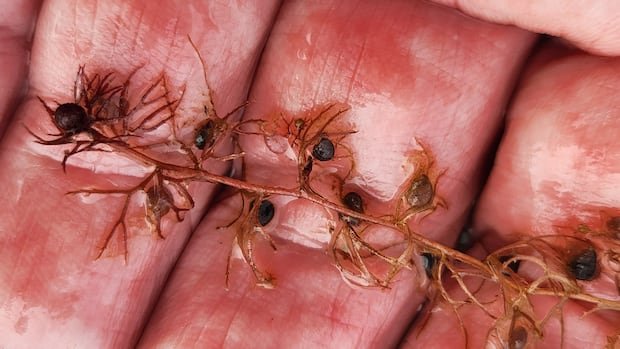

Plant enthusiast Klaus Koehler made a unique discovery while walking through Sylvia Grinnell Territorial Park near Iqaluit in July, spotting a rarely seen Arctic plant species. Koehler found a bladderwort, a brownish weed-like plant, in a pond during his stroll. This discovery could have implications for invasive species in Northern climates as temperatures rise due to climate change.
The carnivorous bladderwort, covered with small black balls called bladders containing nearly digested flies, is a species typically found further south and seldom ventures into the tundra. The only other documented occurrence of this plant in the region was in 2012 when scientists found bladderwort samples outside Kimmirut, around 120 kilometers southwest of Iqaluit. The discovery was documented in the scientific journal Phytokeys.
Koehler believes the appearance of this plant could signal a changing climate, with warmer temperatures creating a more favorable environment for plants not traditionally found in the Arctic. This shift in vegetation could impact the ecosystem, leading to the expansion of both invasive and native species into the Arctic region.
Paul Sokoloff, a senior research assistant at Ottawa’s Museum of Nature, shares Koehler’s concerns. Sokoloff, part of the 2012 study group that discovered the bladderwort, highlights the potential risks associated with invasive species entering Arctic ecosystems through various means, such as bird transport, cargo ships, and human visitors.
While Koehler’s finding may not pose immediate threats, Sokoloff warns of the potential impact of other invasive species on Arctic biodiversity. Studies suggest over 2,500 species could invade the Arctic at the expense of native flora. Sokoloff stresses the need to understand the implications of climate change on Arctic plant life.
Koehler intends to send a sample of the Iqaluit bladderwort to the Museum of Nature for further analysis, aiding scientists in gaining insights into the plant’s northward expansion.