
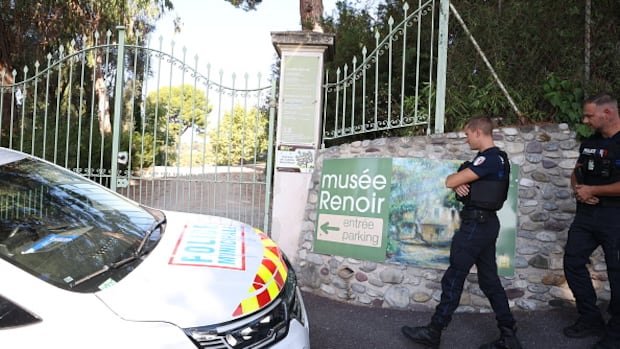

Thieves recently targeted the Renoir Museum in Cagnes-sur-Mer on the French Riviera, making off with four paintings. However, as the alarms sounded, the culprits dropped two of the stolen artworks in the museum’s gardens during a police pursuit early on Tuesday.
Pierre-Auguste Renoir’s masterpieces are highly prized, often fetching millions of dollars at auctions. The mayor of Cagnes-sur-Mer, Bryan Masson, lamented the attack on the museum, emphasizing its significance as a part of the town’s history and heritage.
The stolen paintings, namely “Madame Colonna Romano” and “Young Woman at the Well,” are part of the renowned Musée d’Orsay in Paris and were on loan to the Renoir Museum in Cagnes-sur-Mer. Despite the mayor’s plea that the stolen art is invaluable and cannot be easily sold, the thieves also took “Madame Pichon” and “Coco Reading,” depicting Claude, the son of a famous Impressionist artist.
An investigation into the theft by an organized gang has been launched by the Marseille prosecutor’s office. The museum, situated in the artist’s former mansion where Renoir spent his final days, displays a collection of 13 paintings by the master along with sculptures, furniture, and photographs.
This incident follows a trend of increasingly violent art thefts across Europe, as highlighted by Europol. The Louvre Museum heist in Paris last year, where jewels worth €88 million were stolen, serves as a stark example. The French government faces mounting pressure to address security lapses in museums, as highlighted by a recent parliamentary report citing inadequate resources and preparedness to safeguard precious artworks.
Mayor Masson, of the National Rally party, has called for enhanced security measures to protect museums nationwide. The lack of emergency plans and video surveillance in many cultural institutions was exposed in a 2024 survey by the French Culture Ministry. The need for heightened vigilance in safeguarding artworks has been underscored by this recent art heist, signaling a new wave of art-related crimes targeting museums.