
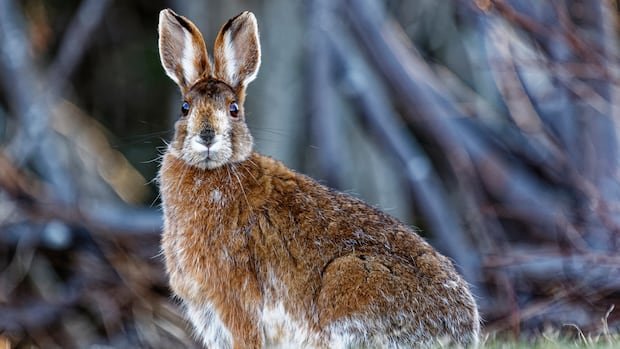

Snowshoe hares have become more prevalent on Prince Edward Island following post-tropical storm Fiona, according to a wildlife biologist in the province. Garry Gregory from P.E.I.’s fish and wildlife division mentioned an increase in sightings of what Islanders initially mistake for rabbits but are actually snowshoe hares, the native species to the region.
While there is no official data tracking the growth in the snowshoe hare population, Gregory suggested that the aftermath of the 2022 storm, which left behind dense debris and complicated forest landscapes, likely facilitated an increase in hare numbers. The storm’s impact created ideal escape cover for hares, making them less accessible to predators.
The disturbance caused by Fiona not only provided hiding spots for hares but also led to new growth in the forest. The opened canopy allowed for the flourishing of plants like willows and grey birch, essential winter forage for snowshoe hares. This new habitat benefits various wildlife species, including songbirds and other animals relying on early successional growth.
While a rise in hares could suggest an increase in predators in some regions, on P.E.I., the predator population consists of generalist species that feed on a variety of prey. Gregory advised against feeding hares encountered in yards, emphasizing that they have abundant natural food sources and may become vulnerable to harm if drawn closer to human environments.
Additionally, Gregory addressed concerns regarding ticks on hares, clarifying that the tick species found on hares are not the primary carriers of Lyme disease and are typically harmless unless the infestation is severe. He attributed the rise in reported tick sightings on hares to increased public awareness and the ability to document such observations through mobile phones.
In conclusion, Gregory highlighted the importance of allowing hares to forage naturally and advised against feeding them, emphasizing the need to maintain a safe distance to prevent potential harm to both the animals and pets.