
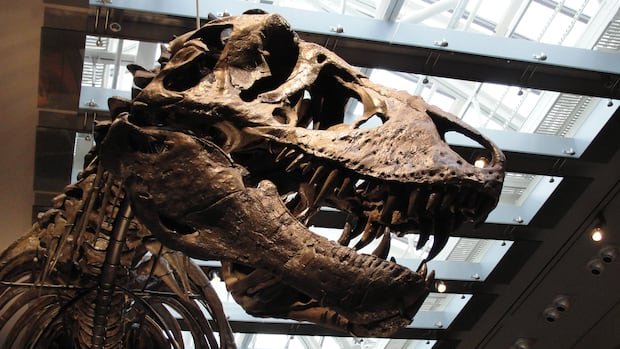

A recent study conducted by scientists has shed light on the body temperature of Tyrannosaurus rex dinosaurs, addressing the long-standing debate on whether these creatures were warm-blooded. Through innovative chemical analysis, researchers were able to estimate the internal heat of two T. rex specimens.
Lead researcher Aradhna Tripati, a geochemist and professor at the University of California, Los Angeles, explained the methodology used in the study. Instead of traditional temperature measurement techniques, which are obviously not feasible for extinct dinosaurs, the team employed a chemical approach that detects temperature-related variations in hard tissues like tooth enamel and eggshells.
By examining the mineral bioapatite found in these tissues, scientists compared the isotope clumping patterns in living animals with known body temperatures to infer the internal heat of extinct animals, including dinosaurs. A previous study by UCLA researchers a decade ago, using eggshells from other dinosaur species, supported the theory that some dinosaurs were warm-blooded.
In this recent research, scientists faced challenges in obtaining suitable samples from T. rex teeth due to their thin enamel. By refining their technique using teeth from a megalodon shark, the team successfully analyzed tooth fragments from a young T. rex named Thomas. The results indicated a body temperature range of 33.8 to 38.8 degrees Celsius for T. rex, comparable to that of large mammals and certain flightless birds.
The implications of this study extend to understanding the behavior and habitat range of T. rex. A warm-blooded T. rex, according to Tripati, could have thrived in various environments, including colder regions like the Arctic, distinguishing it from cold-blooded reptiles. Paleontologist Anthony Fiorillo, known for his work on Alaskan dinosaurs, praised the study for providing valuable insights into the thermal physiology of T. rex and its adaptability to different climates.
The findings also prompt considerations about the metabolic efficiency of T. rex and its energy requirements, especially given its massive size. While the study suggests T. rex was likely active throughout the day and night, further debates remain on the specifics of its warm-blooded metabolism compared to modern animals.
Overall, this research contributes to a deeper understanding of dinosaur physiology and sheds light on the evolutionary adaptations that allowed T. rex to thrive across diverse landscapes, ranging from Mexico to Alaska.