

Almost two years after an unusual occurrence involving an overwhelming number of fish at Canada’s largest nuclear power plant led to concerns about reactor safety, recently acquired documents shed light on the extraordinary nature of the event. Experts are now cautioning that atypical ecological circumstances pose an increasing challenge for nuclear facilities globally.
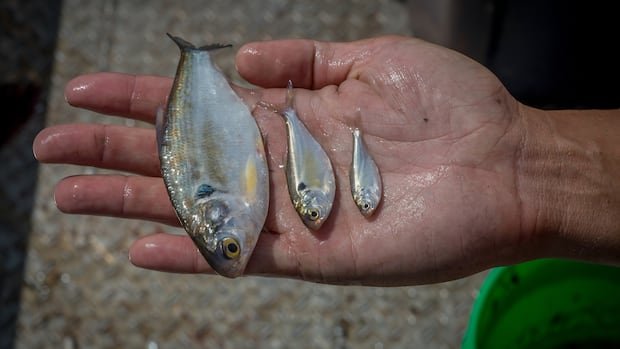
The incident took place in February 2025 at the Bruce Nuclear Generating Station near Tiverton, Ont., where millions of gizzard shad inundated the cooling systems, leading to the shutdown of one reactor, reduced power at another, and a significant quantity of dead fish washing up on Lake Huron’s shores. Obtained federal and provincial records, totaling over 1,200 pages, unveil how an environmental phenomenon involving the small, cold-sensitive fish tested the plant in unforeseen ways.
Bruce Power, the plant’s operator, declined a broadcast interview but later issued a written statement without addressing specific inquiries from CBC News.
An investigation by Bruce Power revealed that the plant encountered “a novel environmental event,” while Canada’s nuclear regulator described an unprecedented volume of gizzard shad that overwhelmed the defenses meant to prevent fish from entering the cooling water system.
In a separate probe conducted by the company, it was concluded that the fish influx on two occasions in February 2025 posed a challenge to reactor safety. David Novog, a nuclear safety expert at McMaster University, explained that such a challenge implies a reduction in the effectiveness of safety measures, requiring the shutdown of nuclear power plants.
Despite the disruption caused by the fish event, former principal scientist and manager at Bruce Power, Douglas Boreham, emphasized that there was no risk to reactor safety as the reactors responded as designed when their cooling systems were affected. He clarified that the shutdown was a standard safety measure to maintain optimal operations.
The Canadian Nuclear Safety Commission warned of potential severe consequences in a report prepared for the International Atomic Energy Agency, highlighting the impact of the mass fish die-off on the plant’s cooling systems and reactor operations.
The scale of the fish event was massive, with Bruce Power estimating that approximately 8.1 million gizzard shad were present near the plant on a single day in February 2025. Unfavorable winter conditions pushed the fish towards the warmer water discharged by the nuclear facility, resulting in a significant mortality rate among the cold-sensitive species.
The incident underscored the need for nuclear plants to adapt to changing environmental conditions. Experts like Novog have observed a rise in events disrupting cooling systems at nuclear facilities worldwide, citing instances in Romania and France where environmental factors forced reactors offline in recent years.
Bruce Power’s investigation identified shortcomings in real-time environmental monitoring and organizational failures in addressing emerging challenges linked to environmental changes. Following the event, the company invested nearly $10 million in mitigation measures and research to prevent similar incidents in the future.
The measures implemented by Bruce Power include physical barriers to deter fish from cooling-water intakes, underwater acoustic deterrents, monitoring systems, and artificial intelligence for early detection of fish congregations. The company acknowledged the need to prepare for emerging risks associated with climate change and emphasized the importance of preventing disruptions to ensure the continuous operation of nuclear plants for low-carbon electricity production.