

In Gaza, where a calm seaside resembles a holiday destination rather than a conflict zone, Palestinians enjoy brief respites from the ongoing war that has persisted for three consecutive summers. Despite discussions about peace negotiations and withdrawals, there is widespread skepticism that the conflict has truly ended.
Israeli airstrikes target Gaza almost daily, purportedly aiming at Hamas militants deemed as high-priority targets by Israel. Simultaneously, Israeli forces have progressively advanced westward, encroaching on Palestinian territory and confining two million individuals to an increasingly limited area close to the Mediterranean Sea.
Following the Gaza peace agreement in October, Israel initially agreed to withdraw its troops behind the “yellow line,” representing the boundary of Israeli military control within Gaza. However, Israel’s military presence now extends beyond the designated 50% to over 60% of the territory, citing operational security as justification for the expanded boundary.
Israeli Prime Minister Benjamin Netanyahu has directed further expansion of Israeli control to 70%. Rejecting a U.S. proposal to gradually withdraw both Israeli forces and Hamas militants from Gaza, Netanyahu stipulated that Israel would not pull back until Hamas disarmed, leading to a deadlock in negotiations.
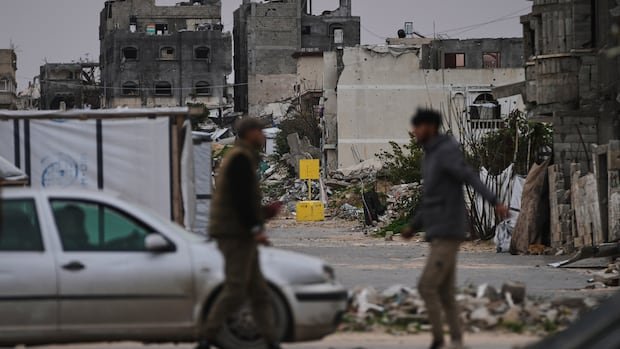
Visual evidence, including satellite imagery and eyewitness accounts, confirms the continual advancement of Israeli troops and the extension of the yellow line in Gaza. This territorial encroachment has had a profound impact on Gaza’s civilians, resulting in displacement, destruction of neighborhoods, and a high number of casualties.
Israel maintains that its actions align with the ceasefire agreement, describing them as defensive measures to enhance security and prevent hostile activities. Construction of barriers and fortified military installations along the yellow line is part of these measures.
While Israel denies intentions to forcibly displace Palestinians or annex Gaza officially, there is mounting political pressure from extremist settler groups and right-wing politicians advocating for annexation and settlement expansion. With upcoming elections and ongoing international negotiations, the situation remains volatile, with Palestinians fearing further displacement and a bleak future.