
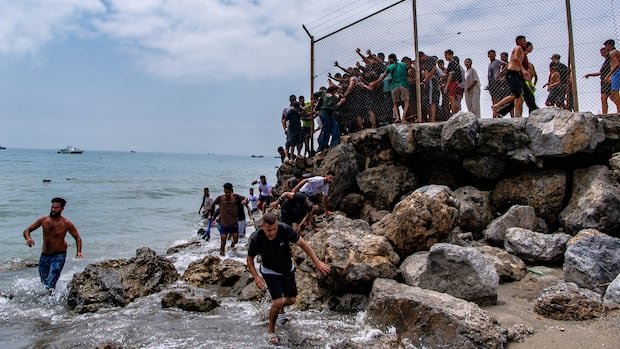

The recent surge of migrants crossing into Spain’s Ceuta enclave from Morocco has resulted in at least 57 confirmed deaths and a significant influx of people into the Spanish territory. The chaotic situation has raised concerns and divided opinions in Europe.
Approximately 60,000 individuals entered the Spanish enclave in North Africa on Thursday, with around 48,300 returning to Morocco by Friday evening. The migrants used various means to breach the border, including swimming from the Moroccan town of Fnideq and attempting crossings from nearby Belyounech.
Some of the migrants, including children and unaccompanied minors, faced perilous journeys, prompting warnings from organizations about the dangers of irregular migration for vulnerable individuals.
Spanish authorities reported recovering 57 bodies on their side of the border, with the possibility of additional casualties on the Moroccan side. The fatalities were attributed to drowning and injuries sustained while attempting to climb the border fence.
The surge in migrant crossings into Ceuta has drawn attention to the geopolitical significance of the region. Ceuta, along with Melilla, serves as a point of entry for migrants seeking better economic prospects or asylum in Europe. The territories, though fortified, have been targets for migrants from Morocco and other African countries.
The sudden rush of migrants on Thursday has been linked to various factors, including a recent legal decision by the Spanish Supreme Court regarding the deportation of sea arrivals. Spanish Prime Minister Pedro Sánchez attributed the surge to human smugglers exploiting legal interpretations.
The response to the situation involved deploying military and police forces to restore order in Ceuta. While many migrants attempted to leave the enclave, some faced challenges finding food and shelter, leading to returns to Morocco. The complex dynamics underlying the migrant surge highlight broader issues of migration, border security, and geopolitical tensions in the region.
Overall, the events at the Ceuta border serve as a stark reminder of the complexities and humanitarian concerns surrounding migration flows between Africa and Europe.