
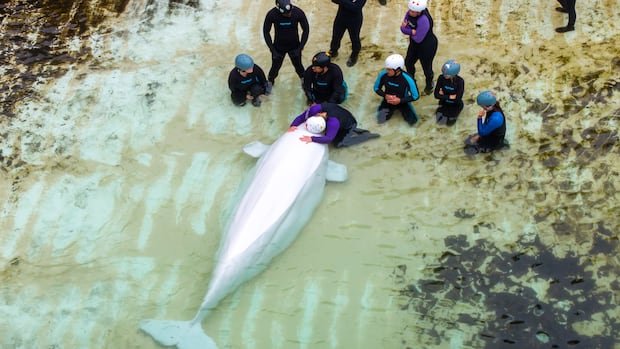

Marineland has completed the transfer of its remaining captive whales and dolphins to five different locations following the Canadian government’s ban on keeping captive whales in 2019. The Ontario theme park, now closed, relocated its 30 belugas and four dolphins to destinations in the U.S. and Spain, marking the largest transfer of these animals globally.
Unfortunately, since the transfers, four belugas and one dolphin have passed away, with the most recent death occurring on Sept. 24 at the Oceanogràfic de València in Spain. Concerns have been raised about the impact of the moves on the animals’ health and well-being.
Echo, a blind Black Sea bottlenose dolphin estimated to be 30 years old, was transported to Oceanogràfic on a 19-hour journey from Niagara Falls, Ontario. Upon arrival, Echo was found to have severe vision issues and other medical complications requiring specialized care. Tragically, his health deteriorated rapidly, leading to his passing overnight.
Experts emphasize that transporting belugas is highly stressful for these marine mammals. They explain that while the transportation process is well-established, it significantly affects cetaceans’ well-being due to the stress it induces.
Recent deaths of several relocated belugas and dolphins have sparked investigations into the circumstances. Facilities are conducting necropsies and examinations to determine the cause of death. While some animals have thrived post-transfer, others have faced challenges, highlighting the complexities of captive marine mammal relocations.