
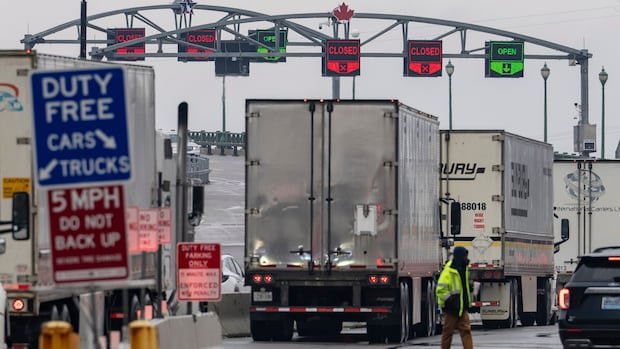

Enforcement of cross-border cargo regulations has significantly increased during the Trump administration, creating challenges and expenses for shippers, according to industry experts. The implementation of tariffs along the 49th parallel has led to heightened scrutiny and penalties in the transportation sector, reflecting a more protectionist stance by the United States customs authorities.
Breanna Leininger, overseeing U.S. operations at Pacific Customs Brokers in Vancouver, emphasized the substantial transformation in customs requirements. The demand for detailed documentation on shipped goods has multiplied tenfold compared to previous years, with customs officials scrutinizing entries more frequently than before.
Importers are now facing a growing burden of providing extensive paperwork, including labor and manufacturing records, to demonstrate compliance with product classifications and trade agreements. The evolving nature of requested information adds complexity and uncertainty to the process, as noted by Leininger.
Data from U.S. Customs and Border Protection indicates a 26% increase in audits this year compared to the previous year, with penalties collected reaching $70.6 million in the first half of the current year, a significant surge from previous periods. This heightened enforcement coincides with an escalating trade conflict between Canada and the U.S., resulting in additional delays and expenses for businesses involved in cross-border trade.
Alan Dewar, the executive vice-president at GHY, a Winnipeg-based customs brokerage, highlighted the substantial costs incurred due to border delays and compliance requirements. These challenges not only impact expenses but also disrupt supply chains and logistics, potentially discouraging cross-border commerce.
Despite efforts by many businesses to navigate these complexities, some find the regulatory environment too daunting and opt out of cross-border trade. U.S. Customs and Border Protection emphasized the importance of importers providing accurate information and complying with trade regulations to facilitate smoother customs processes.
Overall, the heightened enforcement measures are indicative of the changing trade landscape between Canada and the U.S., with implications for businesses on both sides of the border.