
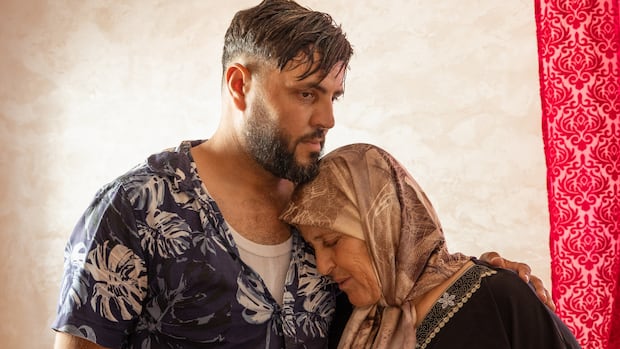

“The only way I recognized her was by a necklace,” stated Jamila Afelom regarding her daughter, Fatin Ben Homar Azizi. “I had given it to her right before she departed.”
Afelom discovered her daughter’s body in a hospital a day and a half after Fatin attempted to swim from Morocco to the Spanish enclave of Ceuta.
In a video call with CBC News earlier this month, from the northern Moroccan city of Tétouan, approximately 40 kilometers from Ceuta, Afelom frequently glanced away from the camera. Her voice occasionally faltered, and she covered her face with her hands as she recounted that day in late July.
“People I knew witnessed Fatin’s body being retrieved from the sea,” she recounted. “I will never erase that shock from my memory.”
-
‘Absolute chaos’ as thousands of Moroccan migrants breach Spain’s Ceuta border
-
Morocco arrests 111 migrants headed to Spain’s Ceuta as sides step up crackdown
Afelom characterized her 26-year-old daughter as bold, resolute, and somewhat boyish.
“She often skipped classes. She would leave her bag at school and dash off to play football,” she recalled.
Soccer was Fatin’s greatest love. Coach Adel El Kaab of Moghreb Athletic Tétouan, a club that competes in Morocco’s premier league, had known Fatin since her childhood. She trained with him for several years before moving to another Tétouan-based team, Moghreb Atletico Tanger, this winter.
“She was like a younger sister to me. I miss her dearly,” said El Kaab, who is compensated for coaching male teams but volunteers his time to train women’s teams.
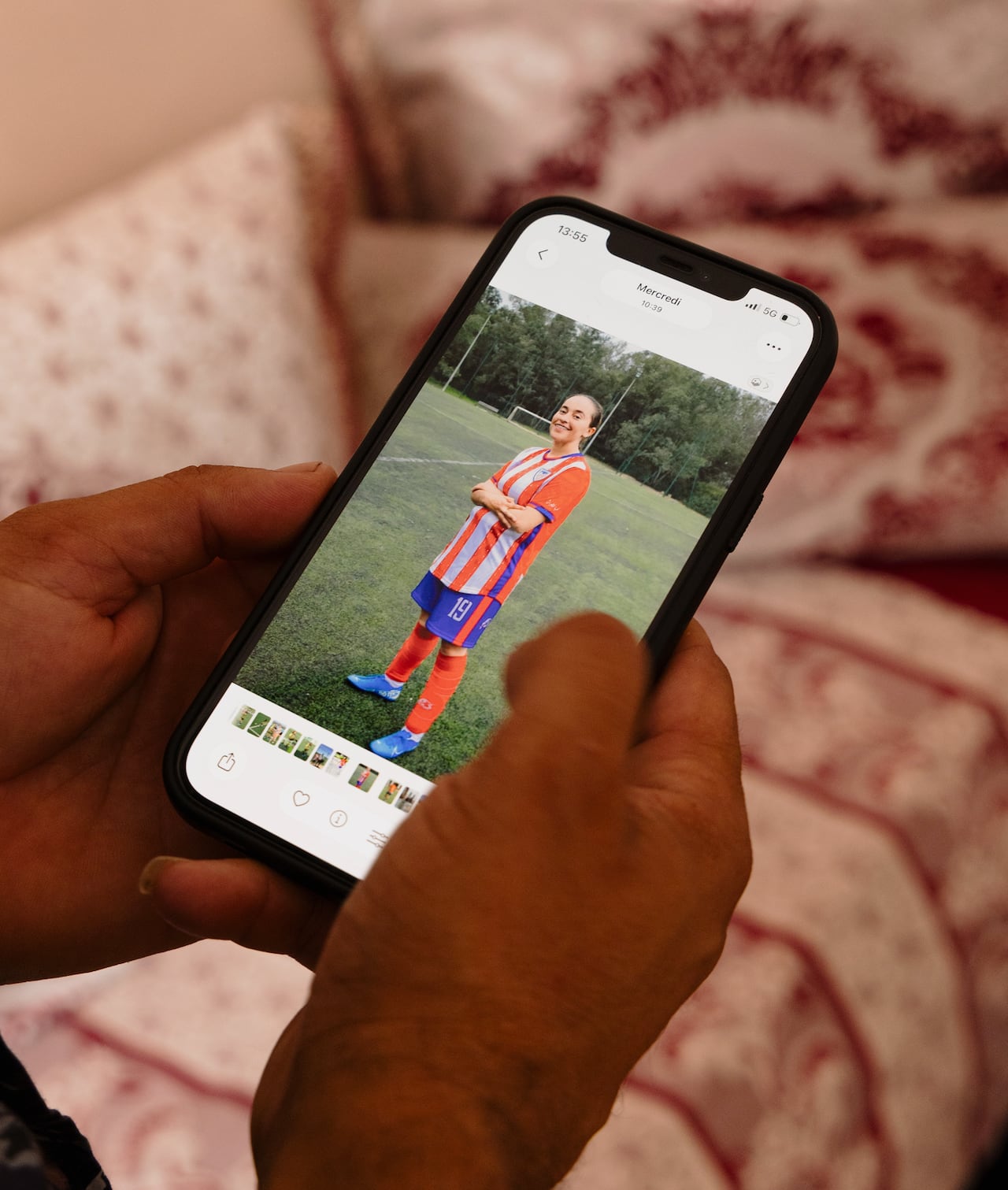
Jawad shows an older photo of his sister Fatin on his phone. (Myriam Meloni)
El Kaab mentioned to CBC News, “Football serves as an escape for these girls,” as many endure challenging economic situations.
Despite his attempts to highlight the perils of irregular migration paths, many of the players he coached departed during the last significant exodus, seeking a better life in Europe.
“Two have come back, but around eight girls remain in Ceuta,” he reported.
“I advise the girls: ‘Take your time. Your lives are invaluable.’
Attempting to prevent her daughter
As a single mother, Afelom works at a cemetery in Tétouan, where she tends to graves and sells small items such as bottles of water, basil, and various herbs. In Islamic tradition, basil symbolizes the fragrances awaiting believers in paradise.
Fatin assisted her mother at the cemetery.
“Together, we earned about 500 dirhams [approximately $75 CAD] weekly,” Afelom noted.
Fatin’s father, a pastry chef, passed away from lung disease when she was 10, leaving Afelom to care for four children. She later remarried and had another daughter, but the father abandoned the family.
“Our government does not provide for us. There is no employment, no healthcare. There is literally nothing,” Afelom lamented.
She recounted that Fatin once expressed, “I want to do everything I can to go to Europe and pull you out of this hardship. I would rather throw myself into the sea than remain in this poverty.” Fatin had previously attempted to reach Ceuta.
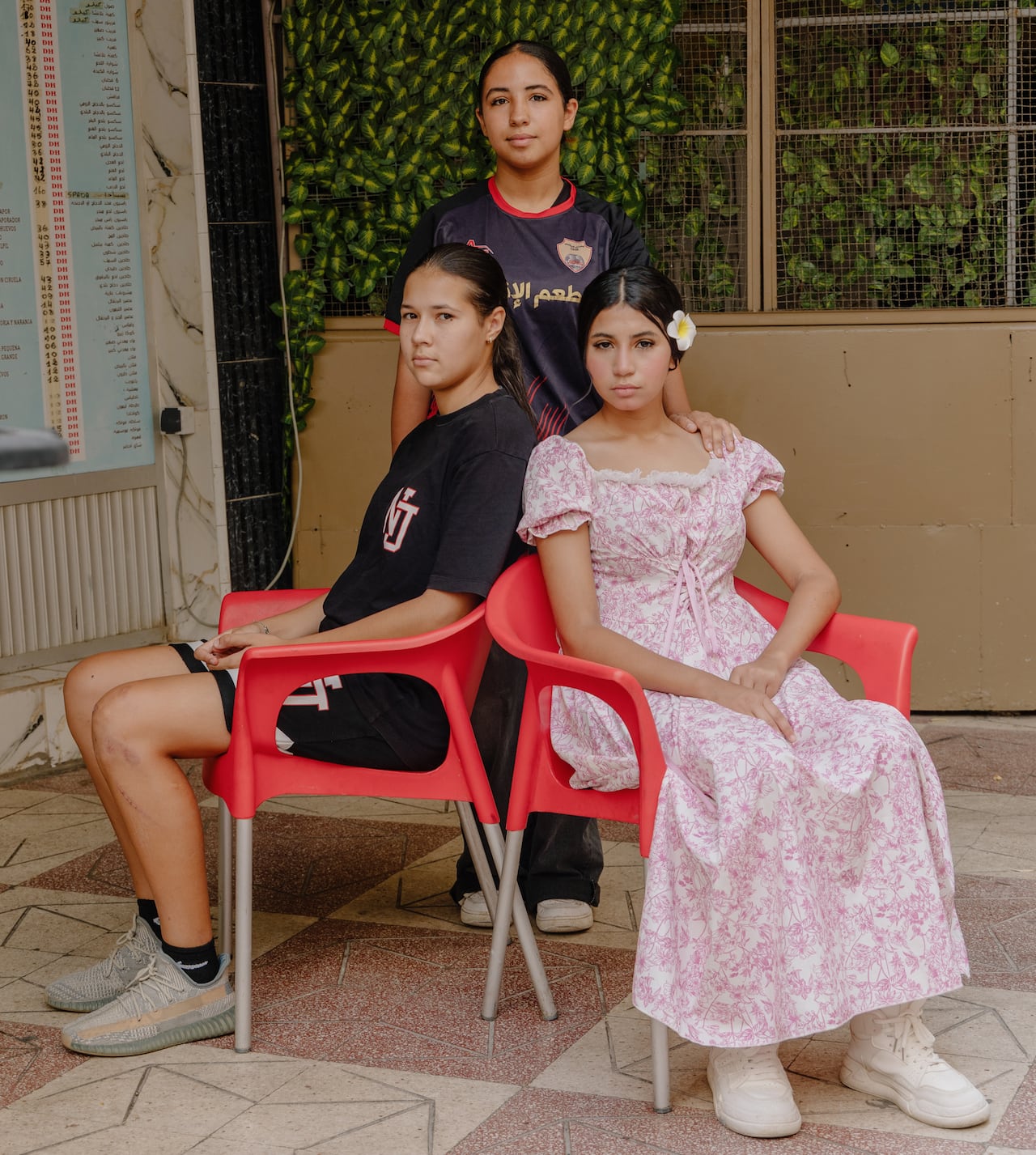
Fatima A., standing, Rawia, sitting left, and Fatima E., sitting right, were friends and teammates of Fatin Ben Homar Azizi. Fatima E. went with Fatin to Ceuta but lost her en route. (Myriam Meloni)
At the end of July, an estimated 80,000 Moroccans and migrants from further south flocked to the northern border city of Fnideq, eager to cross into Ceuta. For many, it represents a route to residency in Europe.
Upon learning about the situation at the border, Afelom stated she “rushed home to check on my children.”
Afelom had attempted to convince Fatin to remain at home. However, her eldest daughter had made her decision.
“She told me, ‘You already stopped me once. So don’t tell me I have to stay. My friends went last time, and now they have residency and a bright future.’
Fatin’s 32-year-old brother Montasir and 14-year-old sister Amira also went to the border. When Fatin arrived, she called her mother.
“Mom, it’s so packed. I fear I might be trampled.” Afelom urged her to return home, and Fatin agreed.
But then she informed her mother she would cross after all. “You really don’t need to be concerned, Mom.”
Later, Fatin called once more.
“It’s fine, I’m just going to cross. If I don’t reply, it’s because my phone has died. You truly don’t need to worry, Mom.”
That was the last communication Afelom received from her daughter.
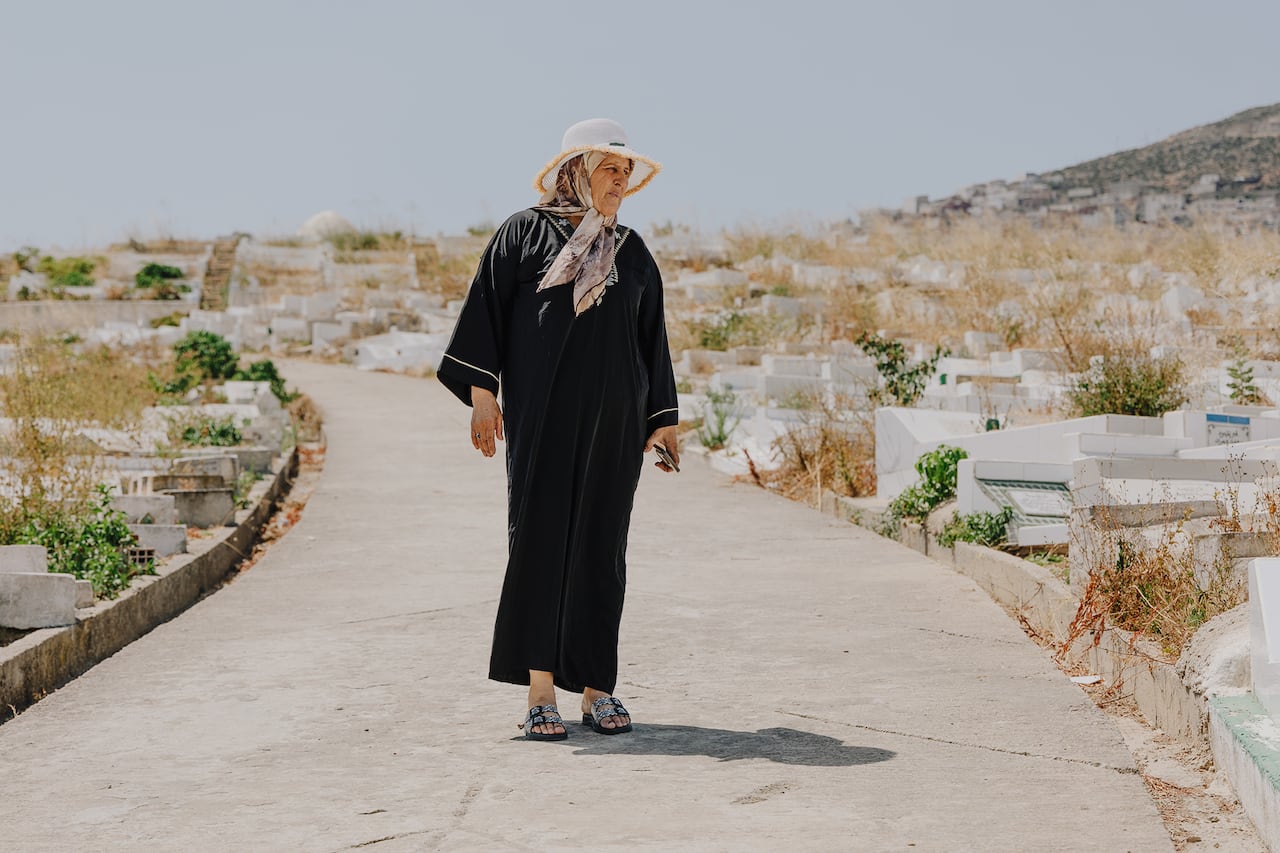
Jamila Afelom visits her daughter Fatin’s grave at the cemetery in Tetouan, Morocco. (Myriam Meloni)
Visions of a new life
“Fatin ventured very far into the sea,” recounted her friend and teammate Fatima, 15, who was also attempting to make the crossing into Ceuta that day. In the turmoil, Fatima lost sight of Fatin.
It was only after Fatima and the other girls returned to Tétouan from Ceuta that they discovered Fatin had perished. “We were heartbroken.”
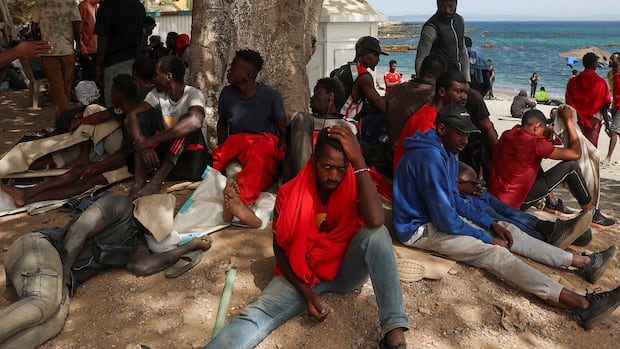
Roughly 2,000 migrants are left in the Spanish enclave of Ceuta after 70,000 surged into the autonomous city last week, leaving humanitarian organizations stretched to their limits.
Fatin’s family initiated a search, visiting hospitals and police stations repeatedly. After a day and a half, they located her body in a hospital in the border town of Fnideq.
The Moroccan human rights group AMDH informed CBC that at least 141 individuals lost their lives while attempting to reach Ceuta at the end of July.
AMDH reports that numerous bodies remain unidentified in Ceuta’s morgues, while some victims have already been interred without identification as families continue to search for loved ones. AMDH is urging Ceuta authorities to cease further burials and is calling on Moroccan officials to intervene diplomatically to ensure victims are identified, their remains returned to Morocco, and their families can receive and bury them with dignity.
Fatin was laid to rest on August 1 at the cemetery where she had worked alongside her mother merely days before.
According to her coach El Kaab, for many young Moroccans, migration represents “an escape from the harsh realities they face.”
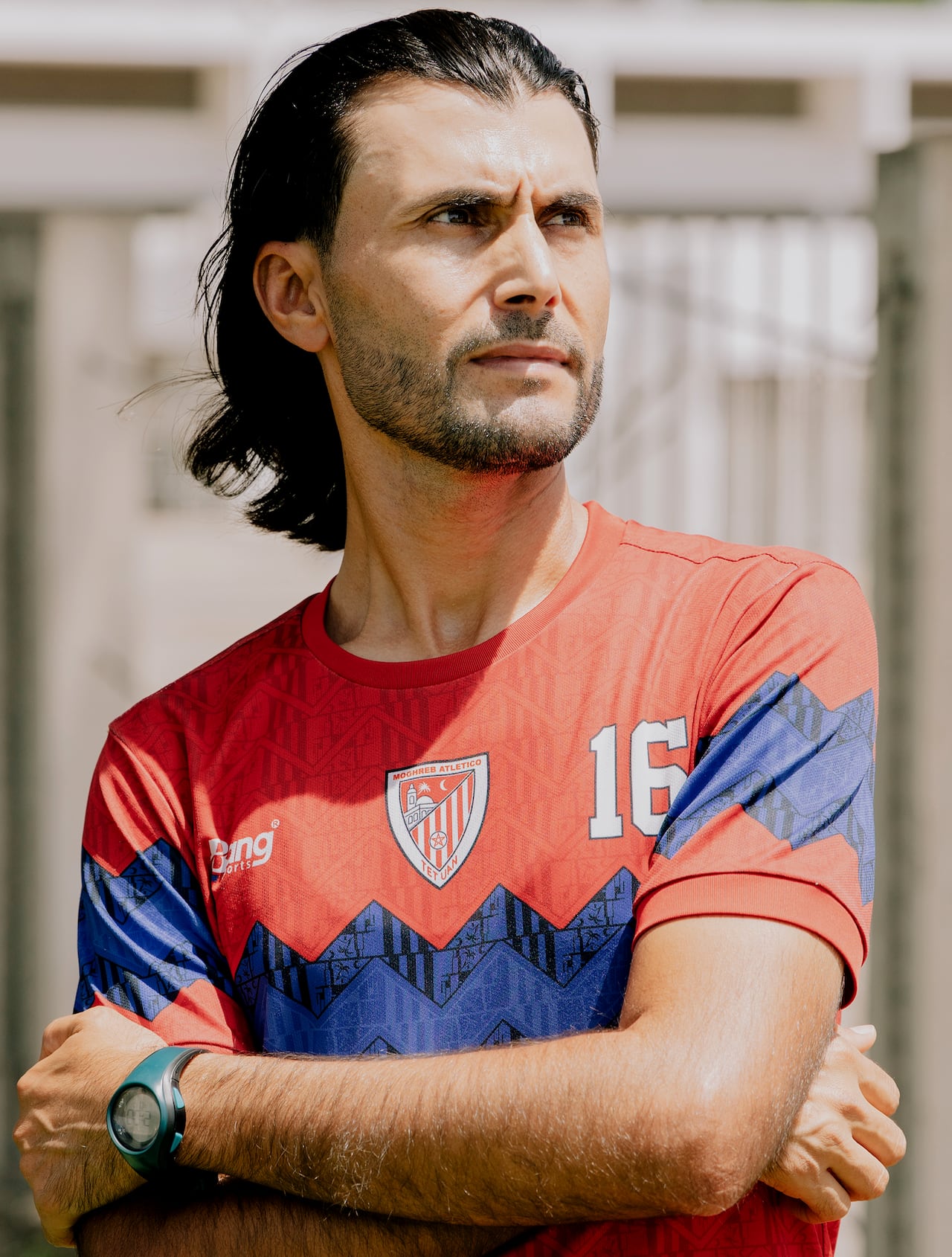
Adel El Kaab was one of Fatin’s soccer coaches. (Myriam Meloni)
Youth unemployment in Morocco stands at around 36 percent, according to the pan-African research organization Afrobarometer.
“Some young girls even face exploitation,” El Kaab remarked.
He observes how social media and tales from migrants influence perceptions of Europe among those in Morocco.
“They aspire to change their financial circumstances. Not only the girls but the boys as well.”
He knows of 17 boys from his club who have migrated.
“We endeavor to raise awareness among the players about the risks,” he stated. Unfortunately, the recent surge into Ceuta “occurred far too rapidly.”
Children in Ceuta
“It pains me deeply. My heart aches every moment,” expressed Afelom, who grieves for her daughter while worrying about the two surviving children who crossed to Ceuta.
As per Spain’s Ministry of the Interior, 2,500 minors are still residing in Ceuta.
“My fourteen-year-old daughter is in Ceuta, lost and all alone. The last time they saw her, she was running through the streets of Ceuta with bloody feet,” Afelom recounted.
Occasionally, she manages to get in touch with her children, but their responses are bleak.
“My daughter said, ‘If I return to Morocco, I will harm myself. I have no father, no sister, nothing,'” Afelom told CBC on August 9.
On August 24, Fatin’s brother Jawad informed CBC that their 14-year-old sister Amira had since come back to their family in Tétouan.
Afelom believes Fatin’s ultimate desire was to alleviate her family’s poverty.
“Yet my dear girl never had the opportunity to realize that dream.”
A version of this story appeared in the Dutch publication NRC and the Belgian publication De Standaard.