
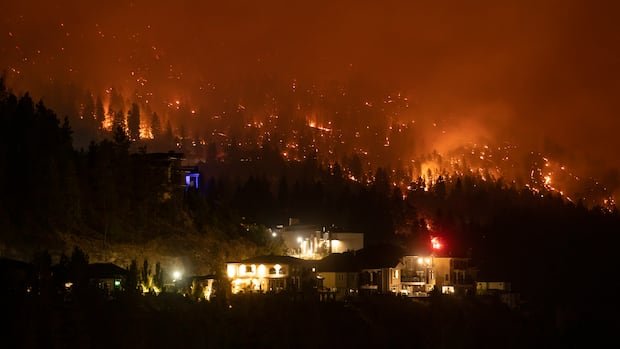

Wildfires in British Columbia have caused the destruction of numerous homes, with an exact count pending as fire season continues. In Summerland, B.C., where a rapid wildfire prompted mass evacuations, residents are advised to prepare for significant losses. Experts are advocating for mandatory integration of FireSmart principles into home construction and design to mitigate fire risks. FireSmart, a program aimed at educating the public on wildfire prevention strategies, offers funding for retrofitting and upgrading buildings to enhance fire resilience.
Mike Flannigan, a wildland fire professor, underscores the necessity of transitioning FireSmart recommendations into enforceable regulations, emphasizing the importance of consistent application in high-risk areas. Implementing FireSmart guidelines such as gutter cleaning, lawn maintenance, debris-free roofs, strategic landscaping, tree spacing, and firewood storage away from structures can significantly reduce property fire risks.
Communities like Logan Lake and Jasper, Alberta, have successfully adopted FireSmart practices, leading to increased fire resilience. However, challenges exist in enforcing mandatory fireproofing measures, as seen in the Village of Lytton’s reversal of initial mandates due to cost concerns. While the future of the FireSmart program remains uncertain amid funding limitations, the Ministry of Forests in British Columbia has committed to wildfire mitigation efforts, including support for FireSmart initiatives. Local jurisdictions are encouraged to take proactive steps in implementing fire prevention measures at a community level.
The push for broader adoption of FireSmart principles highlights the urgency of enhancing wildfire preparedness across British Columbia. Efforts to secure additional funding and ensure sustained support for the program are crucial for bolstering fire resilience in the region.