
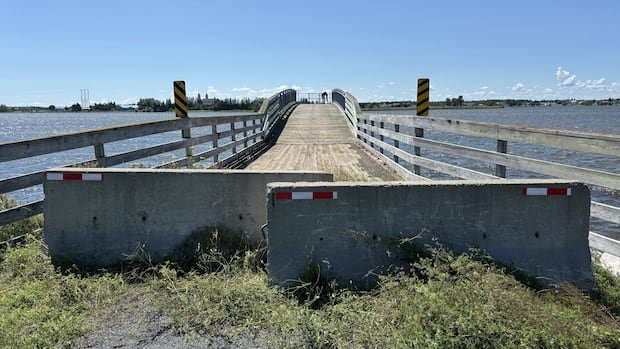

Nearly a decade after a fire destroyed the Inkerman bridge, a vital link in the Acadian Peninsula’s recreational trail system, plans are in place to rebuild it with a $12 million investment from the federal government and the Acadian Peninsula Regional Service Commission. The federal government is allocating $11 million, while the regional service commission is contributing an additional $1 million. The province has not yet committed to funding the project.
The Inkerman bridge, a nearly 500-meter trail over Inkerman Lake connecting Tracadie and Shippigan, was heavily utilized by pedestrians, cyclists, snowmobilers, and ATV riders before it was ravaged by fire in 2017. The destruction of the bridge not only physically divided the region but also disrupted the sense of community.
The Véloroute Péninsule Acadienne, a network of trails stretching over 600 kilometers from Neguac to Lamèque and Rivière-du-Nord, was significantly impacted by the bridge’s demise. Around 70 kilometers of the trail were paved in 2018, linking multiple municipalities and businesses.
Since the fire, residents have been forced to detour onto Highway 113, the primary route in Inkerman, raising concerns about road safety. A significant number of residents, including many cyclists, gathered in Inkerman as Member of Parliament Serge Cormier announced the awaited funding.
A portion of the reconstruction costs is expected to be covered by a local fundraising group, the bridge committee, which raised approximately $5 million through Chase the Ace lotteries since 2017. Despite facing delays and uncertainties, Cormier expressed confidence that the remaining $6 million needed for the project would be provided by the province.
The rebuilt bridge, estimated to cost $18 million during the last assessment in 2025, will be constructed using materials other than wood to prevent a recurrence of the 2017 fire incident. Cormier emphasized the importance of this infrastructure to Northern New Brunswick, aiming to support the growing cyclist tourism economy in the region.
While a specific construction start date was not disclosed, Cormier emphasized the goal of allowing local companies sufficient time to bid on the project. The revamped trail, which will be open to ATVs and snowmobiles during most of the winter and reserved for pedestrians and cyclists the rest of the year, is expected to further enhance the regional tourism prospects.