
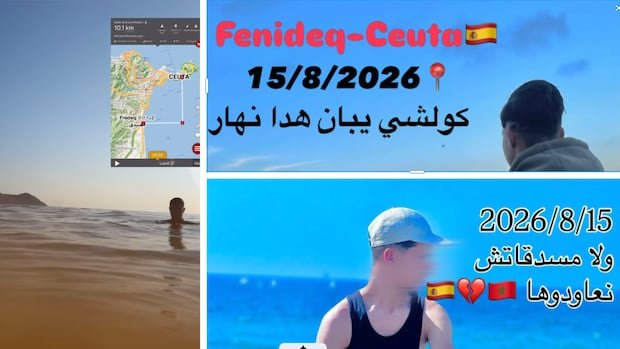

In the lead-up to the recent surge of migrants arriving in Europe, a brief Instagram video received 1.4 million views. The video depicted a young man partially submerged in water with a map showing a sea route from Fnideq, Morocco, to Ceuta, a Spanish enclave in Africa. This video, along with other viral posts on Instagram and TikTok, seemed to influence two waves of irregular migration from Morocco to Ceuta, resulting in multiple arrests.
Various online communities focused on migration-related content, including music, memes, and imagery, utilized these platforms to potentially exploit the aspirations of African and Middle Eastern youth seeking better opportunities abroad. Disagreements exist among authorities and organizations regarding the orchestrator of the Ceuta events, but it is evident that misinformation spread across various online communities played a significant role in driving the migration waves towards Ceuta.
The visual investigations team at CBC, in collaboration with Sebastian Vandermeersch from Bellingcat, identified numerous social media accounts, particularly on Instagram, which became active before the initial wave on July 30. Misinformation suggesting a change in Spanish policy regarding sea arrivals triggered a surge in posts, fueling the belief that crossing to Ceuta was possible. This led to over 72,000 people crossing the border, causing chaos and a political crisis.
Despite the majority of migrants returning to Morocco after the initial influx, around 5,000 individuals remain in Ceuta, with some living on a beach with the assistance of charities. Tragically, nearly 100 people lost their lives attempting the crossing.
The proliferation of misinformation on social media platforms has underscored the real-world consequences of manipulating desperate individuals seeking answers. The surge in social media activity has highlighted the dire circumstances faced by many young people in North Africa and beyond, amplifying the allure of migration as a means to escape economic hardship and lack of opportunities in their home countries.