
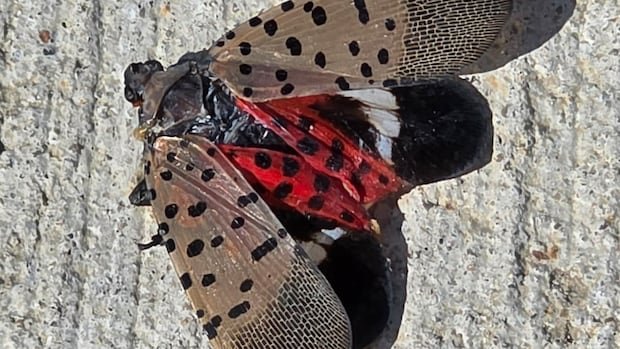

An exotic insect that is notorious for causing harm to grapevines and affecting various crops and trees has been identified in Canada for the first time by the Canadian Food Inspection Agency (CFIA), with the initial detection occurring in Windsor.
Previous sightings of the spotted lanternfly have been reported by Windsor residents, as noted by a non-profit organization dedicated to preventing the spread of invasive species. However, this recent identification marks the first time the insect has been officially recognized through an agency survey, according to the Invasive Species Centre.
Described as a threat to grapevines, the spotted lanternfly has the potential to inflict significant damage on the grape and wine industry. Additionally, it poses risks to other agricultural sectors, horticulture, forestry, residential landscapes, and community parks. The Invasive Species Centre emphasized the urgent need to control the spread of this pest to avert widespread economic, ecological, and social consequences.
Originating from southeast Asia, the spotted lanternfly was first detected in North America in Pennsylvania in 2014. This invasive insect has a broad diet, feeding on the sap of more than 100 different plant species.
To combat the spread of the spotted lanternfly, the Invasive Species Centre urges the public to familiarize themselves with the insect’s appearance. Individuals who encounter the fly or its eggs are encouraged to take photographs, secure the insect or eggs in a sealed plastic bag or container, and promptly report the finding to the CFIA. Timely reporting is crucial to prevent the unchecked dissemination of the spotted lanternfly.
Providing guidance on identifying the spotted lanternfly, the Invasive Species Centre and CFIA offer several tips:
– Adult spotted lanternflies are about 25 mm long and 12 mm wide, with distinctive wing patterns.
– Nymphs of the insect exhibit different colorations based on their developmental stage.
– Egg masses of the spotted lanternfly can be identified by their appearance on host trees and hard outdoor surfaces.
– A sticky substance excreted by the insect, known as honeydew, can attract bees and wasps, leading to potential mold growth.
Moreover, the Invasive Species Centre emphasizes the importance of taking preventive measures to curb the spread of the spotted lanternfly. Recommendations include inspecting vehicles and outdoor items for signs of the insect when visiting infested areas, utilizing high-pressure car washes, and refraining from transporting firewood.
By staying vigilant and reporting suspected sightings promptly, Canadians can contribute to the containment efforts against the spotted lanternfly invasion.