
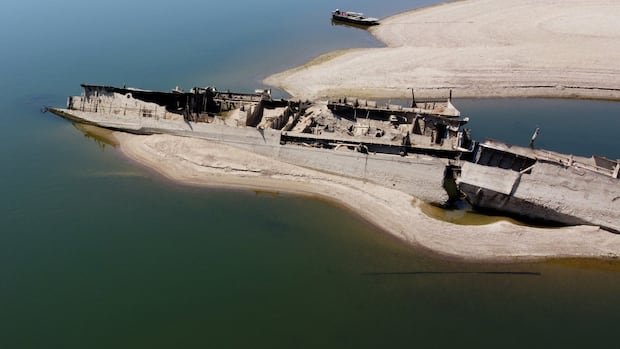

Extreme heat and drought in Europe this summer have led to the resurfacing of Nazi German warships scuttled in the Danube River during World War II as water levels drop significantly. The Copernicus climate monitoring service revealed that June and July were the hottest on record in western Europe, with an estimated 25,000 heat-related deaths reported. The sweltering conditions have exacerbated devastating wildfires and caused water levels in key waterways like the Danube to reach record lows.
Climate scientists emphasize that the exposed wrecks are symptomatic of the larger issue of fossil fuel-induced climate change intensifying heatwaves and droughts, impacting various sectors such as agriculture, shipping, and energy systems across Europe. The visible effects of global heating this summer are just the beginning, according to Richard Allan, a climate scientist at the University of Reading.
Historical accounts indicate that up to 200 warships were deliberately sunk near the Serbian city of Prahovo in 1944 by the Nazis to impede Soviet forces. Unusually low water levels in the Danube have also unveiled other artifacts like a German military motorcycle in Hungary and a British bomb in Slovakia, underscoring the severity of the situation.
Several countries along the Danube, Europe’s second-longest river, are facing critical water shortages. Measures such as restricting water use for irrigation and implementing emergency actions to maintain nuclear power plant operations have been taken to address the crisis. Climate experts warn that the current scenario is a stark illustration of climate change intensifying extreme weather events, with heat and drought reinforcing each other.
The unprecedented events unfolding this summer, from extreme heat to severe water shortages, highlight the urgent need for better environmental stewardship, as stated by Hungarian Prime Minister Péter Magyar. Experts predict that next year could bring even more severe conditions, exacerbated by climate change and potentially record-breaking global temperatures. The significance of reducing greenhouse gas emissions to mitigate future climate-related disasters is emphasized.
The environmental impact of the drying Danube and the emergence of war relics serve as visible reminders of the pressing need for sustainable practices and climate action to address the escalating challenges posed by climate change.