
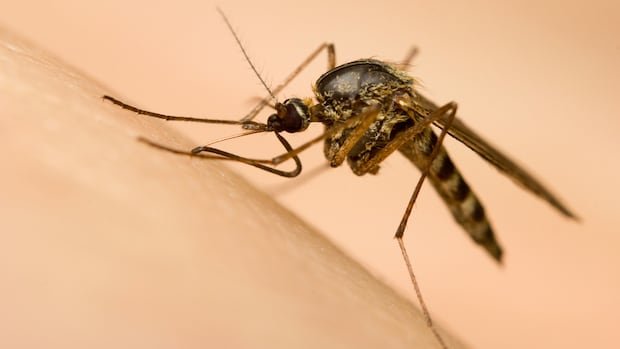

In case you’ve felt like mosquitoes have been exceptionally bothersome this summer and sticking around longer, it might not just be your imagination. Some prairie cities encountered a surge in mosquito numbers earlier this summer, leading to shortages of bug spray in Manitoba, Saskatchewan, and Alberta due to high demand.
Data from the City of Edmonton revealed a significant increase in the mosquito population, reaching 15 times higher numbers in July compared to the same period last year. Peter Daly, a biological sciences technologist at the City of Edmonton, noted that although these figures didn’t mark record highs for the region, they presented a stark contrast to the past two summer seasons, potentially intensifying public perception.
Similarly, Saskatoon and Winnipeg also observed elevated mosquito counts in July compared to the previous year, based on data from these cities. Experts in southern Ontario attributed the prolonged mosquito season and the persistence of itchy red welts into September to the record rainfall witnessed in parts of the region this summer.
Fiona Hunter, a professor specializing in medical and veterinary entomology at Brock University, highlighted a higher presence of the Ochlerotatus trivittatus species in southern Ontario this year compared to previous years. This floodwater mosquito species thrives in low-lying water-filled areas, taking advantage of the abundant rain in southern Ontario this year to flourish.
The species is known for its relentless biting behavior, likely contributing to increased human-mosquito encounters this year. Rosalind Murray, an assistant professor of biology at the University of Toronto, suggested that the heavy rainfall in the Greater Toronto Area and other southern and southwestern Ontario regions might have triggered the hatching of dormant mosquito eggs, leading to a temporary surge in mosquito populations.
However, as overnight temperatures drop, the mosquito nuisance is expected to diminish. Mosquitoes struggle in extreme heat and perish in colder conditions, with Alberta already witnessing a decline in mosquito numbers following a recent cold spell. Experts anticipate a reduction in mosquito activity once nighttime temperatures fall below 10 degrees Celsius, with populations dwindling further after the first frost.
While Edmonton and Calgary faced a notably challenging mosquito season earlier this summer due to early heavy rainfall, subsequent colder temperatures caused a significant decline in mosquito populations. Despite a warm fall in Edmonton, Aedes vexans, the dominant local mosquito species, has shown a decrease, although not as steep as in previous years.
Although temperatures are forecasted to rise above 20 degrees Celsius in the region in the coming week, it is unlikely that mosquito populations will reach the levels experienced in central Canada.