
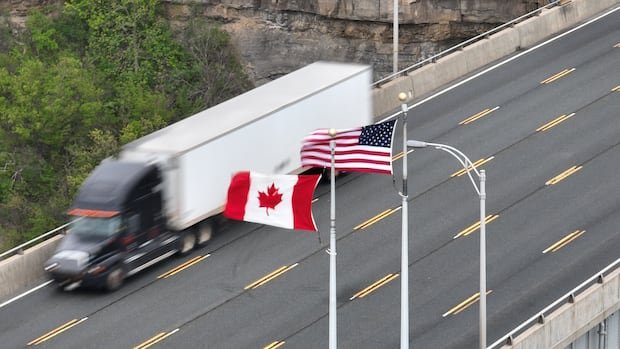

A recent report warns of significant job losses and economic repercussions on both sides of the Canada-U.S. border if the Canada-U.S.-Mexico Agreement (CUSMA) were to collapse. The report, commissioned by the Canadian American Business Council and conducted by Oxford Economics, examined three potential outcomes of the ongoing trade negotiations between the two nations.
In a scenario where CUSMA ends, the report projects the loss of 214,000 American jobs and 102,000 Canadian jobs compared to the status quo. Conversely, successful renegotiation of CUSMA could result in job gains of 137,000 in the U.S. and 98,000 in Canada.
The report emphasizes the critical nature of the trade relationship between the two countries for their economic prosperity. It forecasts significant impacts on GDP, inflation rates, and disposable income in both nations based on different negotiation outcomes.
In the worst-case scenario, manufacturing sectors in the U.S., particularly in states like Iowa, Michigan, Kentucky, and Alabama, would bear the brunt of the fallout. Similarly, Quebec and Ontario in Canada would suffer the most if CUSMA were to fail, affecting their manufacturing industries significantly.
Trade representatives are actively engaged in negotiations to avert new tariffs on Canadian exports, with Trade Minister Dominic LeBlanc meeting U.S. Trade Representative Jamieson Greer in a bid to reach a deal before the looming deadline. Both sides are expected to make concessions to reach a mutually beneficial agreement.
If negotiations fail and new tariffs are imposed, the manufacturing sectors in central Canada, including cement, concrete, paper products, wood, computers, electronics, plastics, and rubber, would face the heaviest impact. Provinces like Ontario, New Brunswick, and Quebec are predicted to be most affected due to their reliance on these sectors, while provinces like Saskatchewan, Alberta, and Newfoundland and Labrador are likely to experience less impact.
The ongoing discussions underscore the importance of trade relations between Canada and the U.S., with potential repercussions for jobs and economies on both sides of the border.