
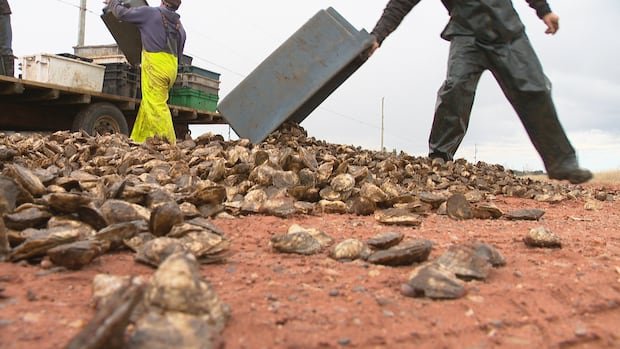


While managing her oyster farm in western P.E.I., Kaila Richard reflects on her father’s legacy, who tragically passed away in 2021. Alongside her husband Bruce Richard, she now operates the farm in Dock River near Alberton.
Describing the emotional connection to her father, Kaila shared how she feels his presence during their daily operations, remembering his guidance and pride in their successes.
Investing significantly in farm upgrades and equipment, the Richards face a critical situation as two devastating diseases threaten the local oyster industry. The outbreak has led to a significant loss of oyster stocks, with many farmers witnessing high mortality rates.
Expressing the severity of the crisis, Bruce described the current state as a “massacre,” emphasizing the shared struggles of farmers in the region grappling with extensive losses.
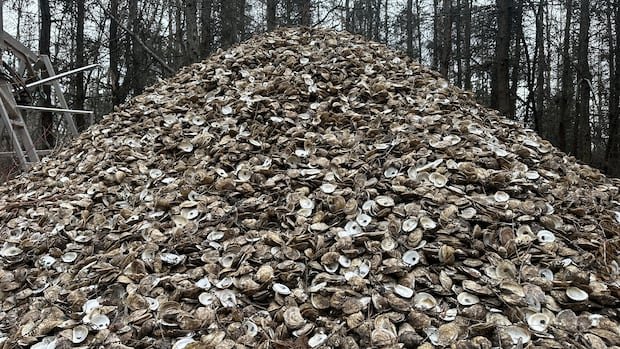
The oyster industry in western P.E.I. faces significant challenges with reports of high mortality rates among oyster stocks due to prevalent diseases. CBC’s Nancy Russell provides insights into the impact of the crisis.
The emergence of two harmful diseases, multinucleate sphere unknown (MSX) and dermo, in P.E.I. waters in 2024 and 2025, respectively, has devastated oyster populations. Despite efforts to mitigate the impact, several growers have reported complete loss of their oyster stocks.
Government initiatives, including financial aid and support for disease-resistant oyster seed importation, aim to assist affected farmers. However, the prolonged recovery process and uncertainties surrounding success pose challenges for farmers who urgently require sustained financial backing.
Stressing the urgent need for financial assistance, Bruce emphasized the critical importance of immediate support to ensure the industry’s survival during this crisis.
Jeff Noye, an oyster grower and mayor of Tyne Valley, highlighted the cultural significance of oyster farming on