
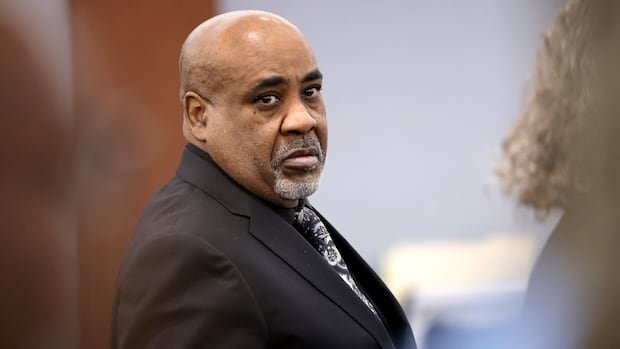

Duane “Keffe D” Davis has been found guilty by a jury of orchestrating the 1996 murder of rap legend Tupac Shakur, marking the first conviction in a case that has captivated hip-hop enthusiasts for years. The 63-year-old Davis was convicted on Monday of murder with a deadly weapon and may face a life sentence in prison. Following a weeks-long trial in Las Vegas, the jury deliberated for three hours before reaching a verdict.
After the announcement of the verdict, Shakur’s sister, Sekyiwa “Set” Shakur, was visibly emotional, while Davis’s son, present in the courtroom, covered his face with one hand. Chief Deputy District Attorney Binu Palal informed the jurors during closing arguments that Davis obtained a firearm and actively sought out Shakur and Death Row Records co-founder Marion “Suge” Knight after they assaulted Davis’s nephew earlier that same night. Palal acknowledged inconsistencies in Davis’s recounting of the events over the years but argued that these changes reflected Davis’s evolving motives and attempts to safeguard himself. However, Palal emphasized that a crucial detail remained consistent: Davis consistently placed himself inside a white Cadillac from which the fatal shots were fired.
Davis’s defense attorney, Michael Sanft, challenged the jurors to identify evidence beyond Davis’s own statements that placed him in Las Vegas or inside the Cadillac on the night of Shakur’s shooting. Sanft highlighted the absence of surveillance footage, phone records, or other evidence linking Davis to the crime scene. The decades-old case, which has garnered attention from both hip-hop fans and legal experts, involved Shakur, a groundbreaking rapper, being fatally shot in Las Vegas on September 7, 1996, while stopped at a red light by a white Cadillac from which shots were fired. Shakur succumbed to his injuries six days later, while Knight sustained injuries but survived.
Despite no charges being filed for years following Shakur’s death, Davis eventually came forward, claiming he was in the Cadillac and provided the gun to others in the vehicle. Davis described the shooting as a retaliatory act following an altercation between Knight, Shakur’s entourage, and Davis’s nephew earlier in the evening. Under Nevada law, aiding in a murder can result in a conviction, and Davis is the only surviving individual among the four men prosecutors claim were present in the Cadillac. The individual who allegedly provided the gun to Davis is deceased.
Prosecutor Palal stressed to the jurors that if they believed Davis’s statements, additional corroboration was unnecessary. While prosecutors did not assert that Davis pulled the trigger, they argued that he bore criminal responsibility for providing the gun and ordering the attack. Palal also contended that the shooting was premeditated, citing testimony and Davis’s versions of events indicating a deliberate plan rather than a spontaneous act.
Palal referenced Davis’s 2019 memoir, “Compton Street Legend,” during the trial, asserting that while some details may have been altered, the core account remained consistent. On the other hand, defense attorney Sanft countered by suggesting that Davis’s changing narratives were not motivated by financial gain. In a dramatic moment during his closing argument, Sanft read a passage from Davis’s memoir aloud, causing a reaction from the audience in the overflow courtroom. In a rebuttal argument, prosecutor Marc DiGiacomo highlighted a scrapbook maintained by Davis containing articles about Shakur, implying a troubling fascination with the murder.
The trial’s outcome has been a subject of intense interest among followers of hip-hop and true crime aficionados alike.