

WARNING: This article may be distressing for individuals who have experienced sexual violence or are aware of someone who has.
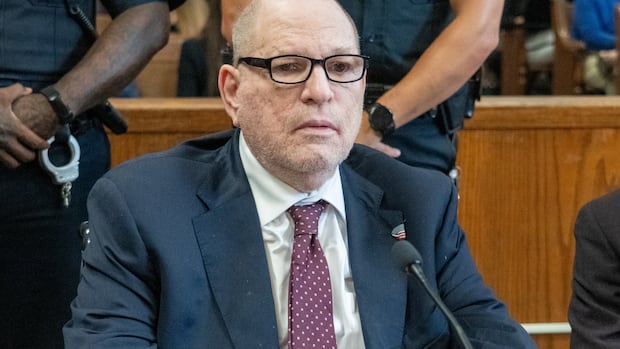
Harvey Weinstein has received a 15-year prison sentence following the reversal of his initial conviction and a retrial last year, which resulted in the jury finding him guilty of a grave sexual offense once again.
On Wednesday, Weinstein was sentenced for the sexual assault of former TV production assistant Miriam Haley, marking the conclusion of a legal journey that has lasted over six years since his initial conviction in 2020.
In 2024, New York’s highest court overturned Weinstein’s conviction and mandated a new trial, stating that the prior trial was biased due to testimonies from other women whose claims were not included in the case.
During his second trial last year, Weinstein was once again found guilty of a first-degree criminal sex act for forcing Haley into a bedroom at his Manhattan residence and sexually assaulting her in 2006. This charge carried a potential maximum sentence of 25 years.
Since being publicly accused of misconduct in 2017 and arrested in 2018, Weinstein has spent more than six years behind bars while his case has repeatedly navigated through the criminal justice system.
He has continuously denied committing rape or sexual assault.
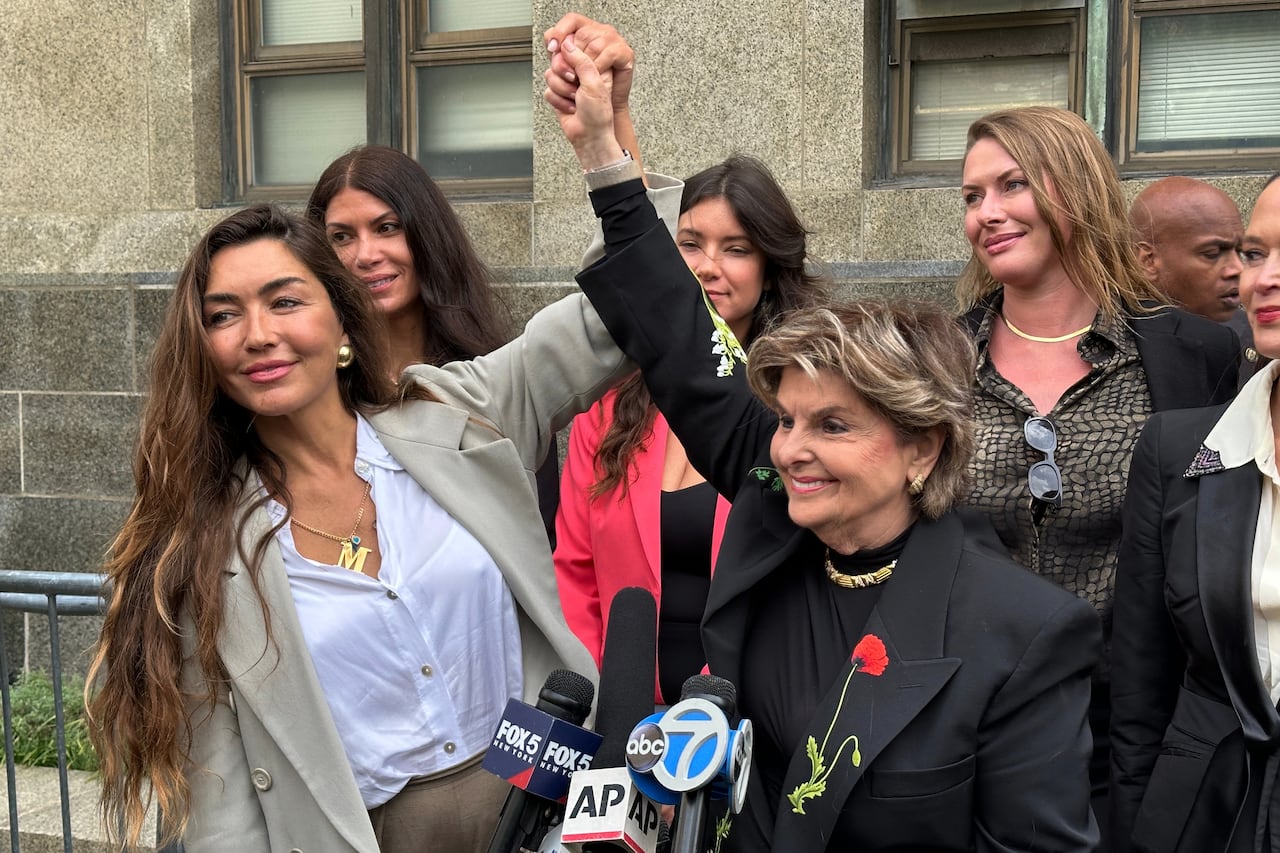
Miriam Haley, left, alongside her attorney Gloria Allred, outside court after Weinstein’s sentencing for sexually assaulting Haley in 2006. (Michael Sisak/The Associated Press)
Once a dominant player in the entertainment sector, Weinstein was a celebrated producer, known for blockbuster films such as Shakespeare in Love, Pulp Fiction, and Chocolat. However, his rapid decline began following sexual assault allegations in 2017, which ignited the #MeToo movement.
At 74 years old, Weinstein is anticipated to appeal the decision. He is likely to remain incarcerated until at least his late 80s. Following the sentencing, he was quickly taken out of the courtroom in a wheelchair, while some of his accusers embraced each other, wiping away tears.
A ‘devastating effect’
Haley recounted her experience of the assault during two trials and spoke to the court on Wednesday just prior to Weinstein’s sentencing.
“Being sexually assaulted by Harvey Weinstein has had a devastating impact on my life and my sense of security that might never fade. Choosing to come forward will have me looking over my shoulder for years,” Haley stated. “It feels like a life sentence for me.”
“I’ve been re-traumatized by exercising my right to hold him accountable. All of this stems from his actions,” she added, noting that she had considered abandoning her quest for justice multiple times.
Shortly after, Weinstein expressed remorse in court for the pain he may have caused. “I do feel regret for Miriam Haley’s suffering, but I must stress my innocence,” he told the judge.
Judge Curtis Farber remarked that Weinstein was once a titan in the film industry, “but the accolades for your achievements will be overshadowed by your actions.”
He noted that Weinstein is now recognized as “a sexual predator, the very embodiment of the MeToo movement.”
‘I will be proven innocent’
Weinstein was initially sentenced to 23 years in prison after being convicted by a jury for assaulting Haley and raping aspiring actress Jessica Mann in 2013.
During his retrial last year, he was again found guilty of a first-degree criminal sex act for the assault on Haley, who is also known as Mimi Haleyi. In a split verdict, the jury acquitted him of forcibly performing oral sex on another woman, Kaja Sokola, and could not reach a conclusion regarding a rape charge involving Mann.
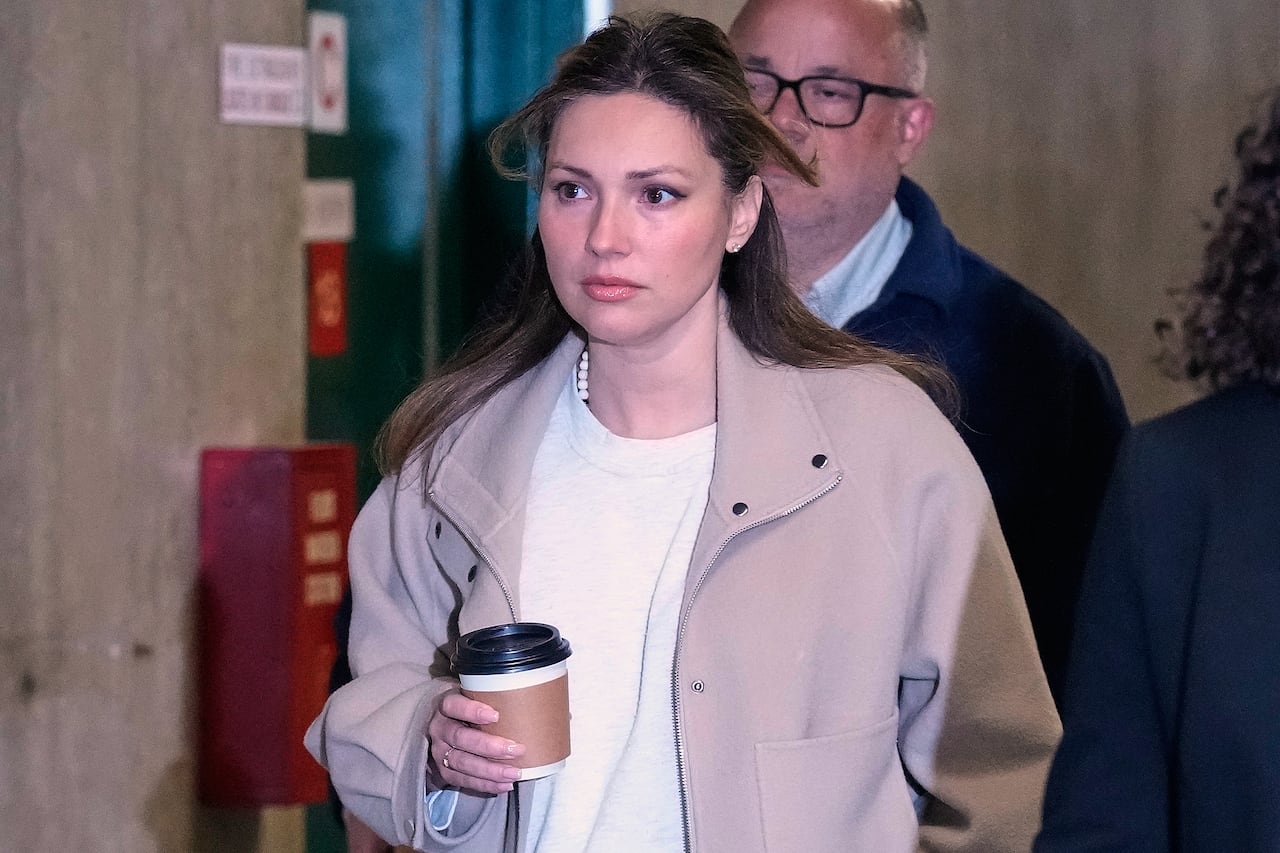
Jessica Mann arrives for Weinstein’s trial in New York on April 28. Last year, a jury was unable to reach a verdict on a rape charge against him involving Mann. (AP Photo/Richard Drew)
“I will be proven innocent. I promise you that,” Weinstein stated in a jailhouse interview with The Hollywood Reporter in March.
After another retrial resulted in a hung jury in May, Manhattan prosecutors decided to drop the rape charge instead of pursuing a fourth trial, after Mann indicated that she could not endure testifying again. This decision facilitated Weinstein’s sentencing.
Failing health
Defense attorney Jacob Kaplan requested that Weinstein receive an additional sentence of three years on top of the six years he has already served, arguing that a longer sentence would increase the likelihood of Weinstein dying in prison.
Kaplan stated that Weinstein is in deteriorating health, having been hospitalized six times since 2025 due to blood cancer, congestive heart failure, and kidney issues.
Weinstein is also awaiting resentencing in a separate rape case in Los Angeles. A California appellate court confirmed the 2022 conviction but invalidated his original 16-year sentence, as the judge had used his New York convictions—later overturned—as an aggravating factor.
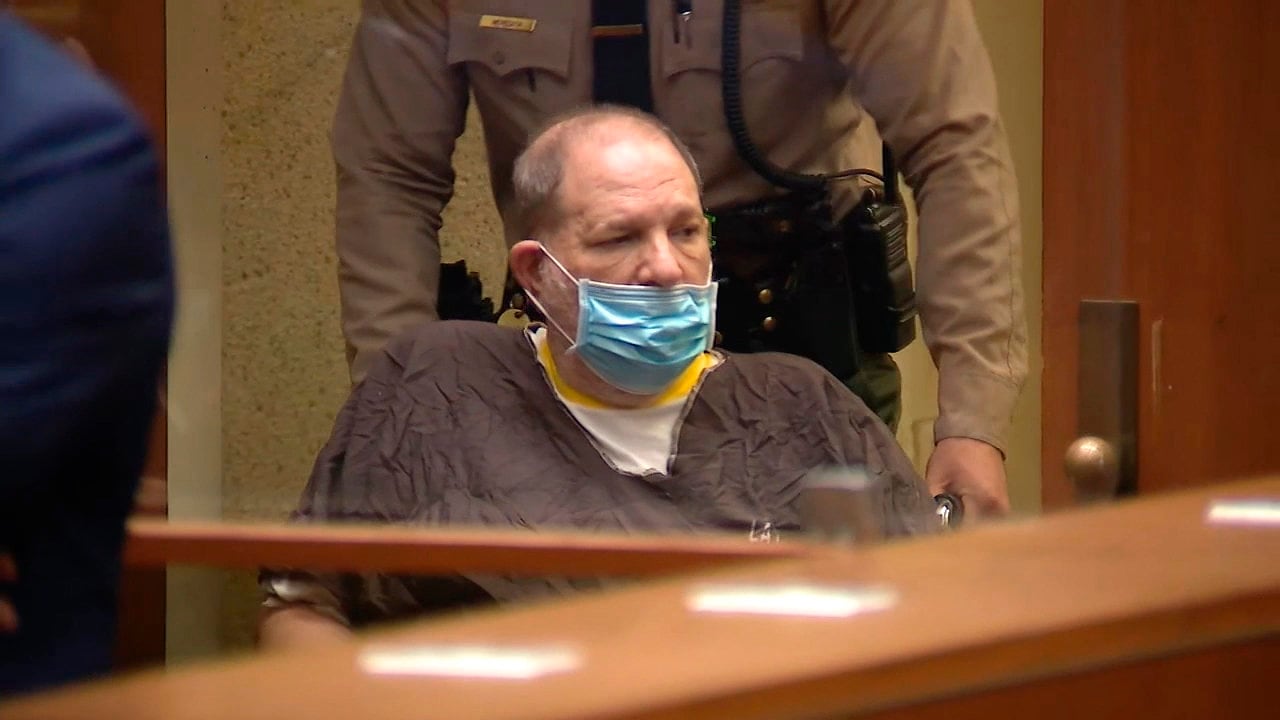
Weinstein arrives to an arraignment hearing on July 21, 2021, in Los Angeles, where he is awaiting sentencing for another rape conviction. (KABC/The Associated Press)
After moving between state prison, where he contracted COVID-19 early in the pandemic, and New York City’s infamous Rikers Island facility, the ailing Weinstein is currently housed in a medical unit for incarcerated individuals at Bellevue Hospital in Manhattan.
His recent health concerns have included chronic myeloid leukemia, diabetes, and mobility difficulties, according to his attorneys. Two years ago, he underwent emergency surgery to alleviate fluid buildup around his heart and lungs.
-
FRONT BURNER
Weinstein conviction: a watershed moment for #MeToo?
-
#MeToo ‘is bigger than one man’: How the Harvey Weinstein trial impacts the movement
Haley, now 49, is a former entertainment producer currently working in advertising.
Originally from Finland and raised in Sweden, she met Weinstein through a mutual acquaintance and briefly worked as a production assistant on a reality competition series he produced, Project Runway.
Haley stated that she accepted an invitation to visit Weinstein’s Manhattan apartment, feeling it would be awkward to decline, especially since she was set to fly to Los Angeles the following day at his company’s expense for a film premiere.
After a brief conversation on his living room couch, she testified that Weinstein lunged to kiss her. She claimed she jumped up to reject him, but he seized her and forcibly pushed her into a bedroom, where he sexually assaulted her, disregarding her pleas to stop.
-
California appeals court upholds Weinstein’s rape conviction, orders resentencing
-
Harvey Weinstein trial begins, portraying ex-producer as predator
She remembered Weinstein asking, “Don’t you think we’re much closer now?” after either the alleged assault or a later instance when she claimed to have had unwanted, but not forced, sex with him.
She also recounted telling him after the second encounter, “You know you can’t keep doing this.”
The Associated Press typically does not disclose the identities of individuals who claim to be victims of sexual assault unless they give consent, which Haley, Sokola, and Mann have provided.