
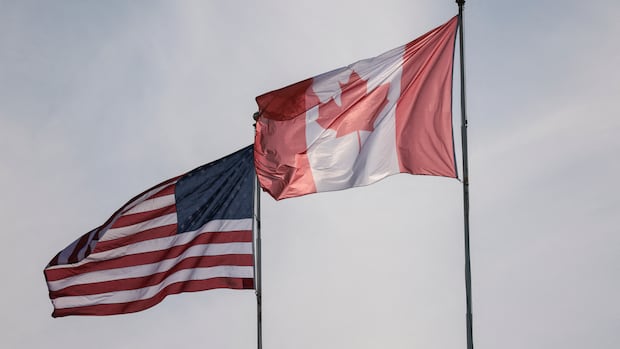

The trade conflict between Canada and the U.S. has escalated into a full-blown war, and the resulting effects may be even more difficult for individuals to dismiss this time around.
Just last week, discussions aimed at resolving trade issues between the two nations fell apart, leading to the implementation of U.S. tariffs at 50 percent on $27.6 billion worth of Canadian exports which took effect Saturday.
In retaliation, Prime Minister Mark Carney declared “dollar-for-dollar” counter-tariffs on an equivalent $27.6 billion of U.S. products, set to begin on September 8.
Following this, U.S. President Donald Trump issued threats of additional tariffs, raising levies on Canadian vehicles, parts, and steel from 25 percent to 50 percent, scheduled to take effect on January 1, 2027.
Both countries are showing no signs of relenting.
As the impasse continues, Canadians may increasingly experience the repercussions. Ottawa is allocating $7.5 billion to assist workers and businesses affected by the new tariffs.
With tensions rising, Washington correspondents Willy Lowry, Katie Simpson, and Paul Hunter explore just how severe this trade war might become and what it would take to bring both parties back to negotiations.
Below are some key takeaways, edited for brevity and clarity. Listen to the complete podcast discussion here.
Paul Hunter: How intense could this trade war get, Katie?
Katie Simpson: Canadians should prepare for some challenging times ahead.
Part of the announcement made by cabinet ministers on Tuesday included further economic assistance for Canadian enterprises that will be significantly impacted.
The U.S. decision to impose those 50 percent tariffs, which are now enforced, was calculated and precise. Many may have noticed the selection of items like hockey sticks and honey, which were chosen very deliberately, and these tariffs will likely inflict considerable damage on numerous small to medium-sized businesses, particularly in one-employer towns, leading to substantial economic harm.
I anticipate that we will hear many stories about the struggles individuals are facing — people worrying about whether they can afford their mortgage, how they will feed their children, if their kids can play hockey this year, and whether parents can support their children through post-secondary education.
There are going to be some very tough discussions across Canada in the coming weeks and possibly months, as we currently do not see a resolution in sight — we are in a phase of escalation, and ultimately, conversations will need to occur to de-escalate the situation, but the question remains: ‘Who will yield first, who wants to be seen as the first to back down?’
The federal government may be required to expand its efforts regarding social supports for those who could face layoffs, job losses, or reduced hours, among other challenges.
Paul Hunter: The government is beginning to take action, but the situation is becoming serious, isn’t it? It’s real and imminent. From my perspective, it’s a test of resilience.
Katie Simpson: We’ve discussed this multiple times — the current sense of patriotism in Canada and the push to purchase Canadian products while boycotting American goods.
This is something that the government and Canadian businesses are encouraging the public to embrace.
However, as this situation prolongs, Canada, with its 41 million inhabitants, contrasts sharply with the United States’ 350 million.
The Canadian economy relies on the U.S. economy for its success, as our population is smaller, and Canada must export its goods to the United States.
The longer this impasse persists, the more difficult it will become for Canadian firms and employers to cope.
Willy Lowry: That’s a very valid point, Katie, and I believe that over the last 12 to 18 months, much of the impact of the tariffs and the American economic policies against Canada have been somewhat lessened, right?
Many tariffs were ultimately reduced, and while people across the nation have experienced their effects, they may not have felt them as acutely as expected.
Paul Hunter: Mark Carney has frequently stated that the dynamics of the Canada-U.S. relationship have evolved, the U.S. has changed, and he is correct.
Trump’s strategy may assume that Canadians will broadly not tolerate these developments and that they will push the Canadian government to concede. This could very well be the expectation among American officials.
It’s reasonable to suggest that Mark Carney would argue, ‘It’s up to Canadians to prove him wrong.’