
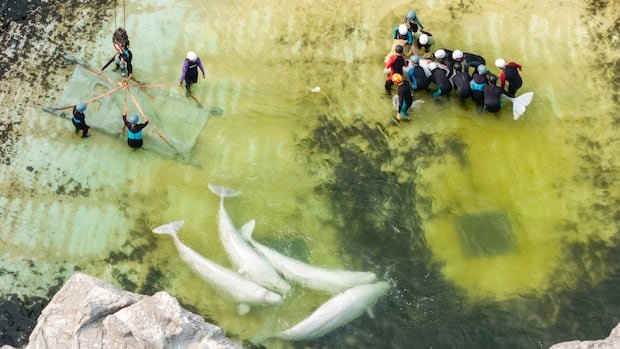

A beluga whale that was part of the recent relocation of animals from the closed Marineland park in Niagara Falls, Ont., has passed away. Oceanogràfic de València confirmed the death of Jelly Bean, who died suddenly and unexpectedly less than a month after being transported to the aquarium in Spain.
Jelly Bean and another beluga named Cleopatra, along with four dolphins, were brought to the facility on Aug. 27 as part of international rescue efforts. Unfortunately, Jelly Bean had been experiencing feeding difficulties in recent days, leading the veterinary team to closely monitor her condition. Despite showing signs of improvement and being responsive to caregivers, Jelly Bean’s health deteriorated.
Oceanogràfic stated that its veterinarians will perform a necropsy in collaboration with pathologists at CEU Cardenal Herrera University to determine the cause of death. Fortunately, Cleopatra and the four dolphins are reported to be in good health at the aquarium.
Fisheries Minister Joanne Thompson expressed sadness over Jelly Bean’s passing and extended condolences to the staff of the Spanish aquarium. Thompson mentioned that the Canadian government had taken necessary steps to ensure the safe transfer of the whales, including issuing permits and authorizations following health assessments.
The article also mentioned the previous deaths of two other belugas shortly after their relocation. The challenges and risks associated with transporting marine animals were highlighted by experts, emphasizing the stress and potential health implications for the animals during such movements. Additionally, concerns were raised about the future breeding of these whales and the need for proactive planning in animal relocations.
The relocation of the belugas from Marineland was prompted by financial challenges faced by the park, leading to the transfer of all 30 belugas and four dolphins to various aquariums in the U.S. and Spain. Animal welfare organizations have been advocating for transparent health assessments and careful planning in such relocations to mitigate risks and ensure the well-being of the animals involved.