
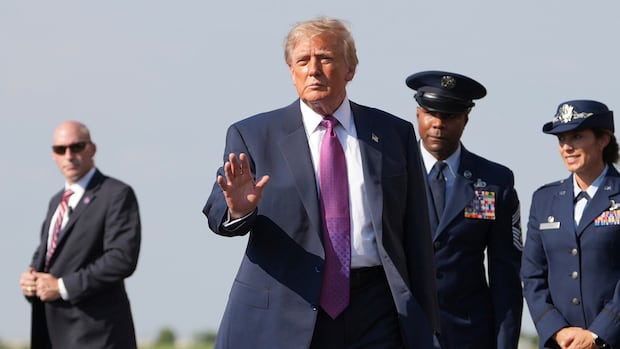

Several U.S. lawmakers urged Donald Trump to conclude the conflict with Iran as it marked its six-month anniversary on Friday, while the U.S. president has sent conflicting messages about the situation.
Trump indicated that the military’s offensive actions and the blockade of the Strait of Hormuz have helped the U.S. meet its goals. On social media Wednesday, he shared a post proclaiming “MISSION ACCOMPLISHED 2026,” accompanied by AI-generated visuals featuring the face of Iranian supreme leader Ayatollah Ali Khamenei, who died on February 28 as U.S. and Israeli airstrikes initiated the war.
In recent weeks, Tehran and Washington have mainly exchanged aggressive rhetoric, leaving diplomatic efforts to intermediaries, while Trump has appeared more focused, at least publicly, on his displeasure over Canada halting trade negotiations.
The U.S. president is anticipated to concentrate increasingly on the November 3 midterms, where he has been involved in attempts to sway voting patterns, and is preparing for a unique midterm Republican mini-convention in the upcoming two weeks.
Rep. Adam Smith from Washington, the leading Democrat on the House Armed Services Committee, issued a statement on Friday highlighting several unresolved issues stemming from the war, prioritizing the impact on military personnel.
“The casualties continue to rise, with 19 American service members dead and over 750 injured, while thousands of innocent civilians have lost their lives in the region,” asserted Smith. “Tens of billions of taxpayer dollars are being squandered, driving up the prices of gas, utilities, and groceries domestically, while crippling economies globally.”
‘More expensive and more chaotic’
The U.S. and Israel have targeted several of Iran’s senior religious, military, and political figures, and Khamenei’s successor, his son Mojtaba, has reportedly been absent from public view due to serious injuries sustained early in the conflict.
Additionally, it has been estimated that rice prices in Iran have surged by approximately 60 percent since the war’s onset, while beef prices have skyrocketed by 150 percent, forcing Iranians to contend with long queues at gas stations. The International Monetary Fund predicts a contraction of over 5 percent in Iran’s gross domestic product this year.
However, the U.S. has also faced costs beyond the direct expenses of Operation Epic Fury, from Trump’s approval ratings in various polls to rising fuel prices for many Americans due to disruptions in oil markets. The conflict has also strained the relationships between the White House and allies in Europe, the Middle East, and Asia, with Trump expressing frustration over their lack of support for the U.S. in the war.
-
Trump orders joint military exercises with South Korea to be scaled back
-
Trump threatens to bomb Oman if it ‘gets in the way’ with Iran
According to Brett Bruen, a former U.S. diplomat now with the D.C.-based public affairs firm Global Situation Room, Trump “has made the world more expensive and more chaotic.”
Iran has gained leverage following the initial shock from U.S. strikes, employing drone attacks and mining operations in the crucial Strait of Hormuz. This has deterred commercial vessels from nations unfriendly to the Iranian regime from navigating the passage, which typically facilitates the movement of significant quantities of oil and liquefied natural gas.
In response, the U.S. implemented its own naval blockade to restrict vessel movements to Iranian ports. Trump has consistently asserted that the strait is open, including earlier this week, but ship-tracking services estimate that activity has dropped to around 5 percent to 15 percent of pre-war levels.
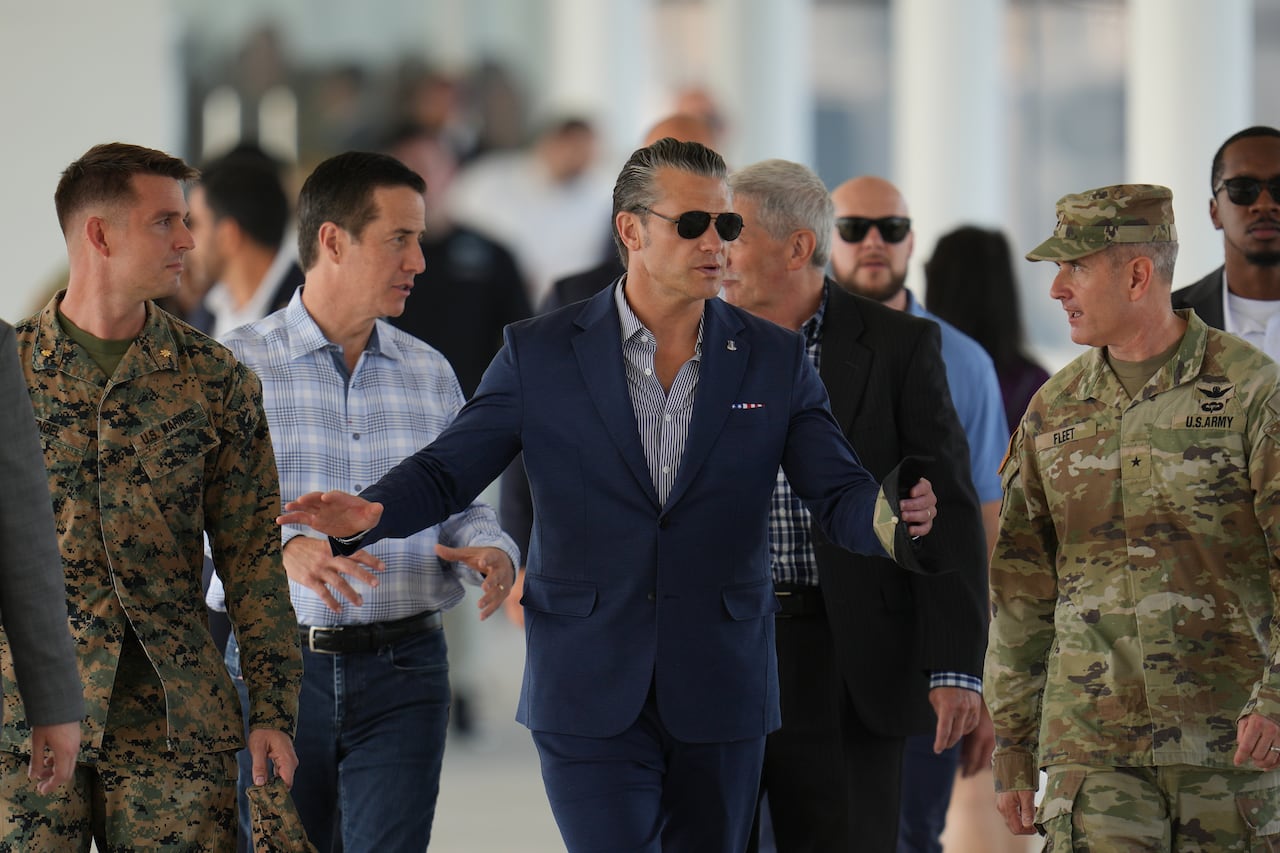
U.S. Defence Secretary Pete Hegseth is seen on Aug. 13 participating in a military exercise in Panama City, Panama. Hegseth estimated in July that the Iran war had cost the U.S. $37 billion. (Matias Delacroix/The Associated Press)
Democrats have previously called for increased transparency regarding the war’s expenses. In July, Defence Secretary Pete Hegseth informed a congressional committee that the military’s expenditures for the war amounted to $37.5 billion, but the opposition and certain think tanks argue this total underrepresents the actual costs, considering the missile systems and munitions used by the U.S. this year and depleting stockpiles.
“Pete Hegseth should be dismissed, the war must come to an end, and taxpayer funds should be allocated to making life more affordable,” posted House Minority Leader Hakeem Jeffries of New York on social media on Friday.
Few Republicans have voiced opposition to the war itself; however, some have criticized specific military strategies. Rep. Thomas Massie of Kentucky, generally against U.S. military interventions abroad, stands out as an exception.
“The 1973 War Powers Act mandated that Trump withdraw forces within 90 days unless Congress authorized otherwise,” he stated on Friday. “[The administration] absurdly claimed to halt the war and restart new hostilities at 91 days. We are now past 180 days. End the War.”

Certain embassy staff in the region reportedly set to return
Trump indicated this week that he is “not in a rush” to bring Iran back to the negotiating table. This contrasts sharply with his messaging throughout much of the summer, during which he emphasized the necessity of reaching an agreement with Iran to prevent its acquisition of a nuclear weapon.
While there are currently no negotiations taking place, there is also no indication that a new military offensive is imminent.
The administration has stated its intention to economically suffocate Iran, even as Treasury Secretary Scott Bessent’s “Operation Economic Outcast,” announced on Monday, was more focused on warnings than specifics.
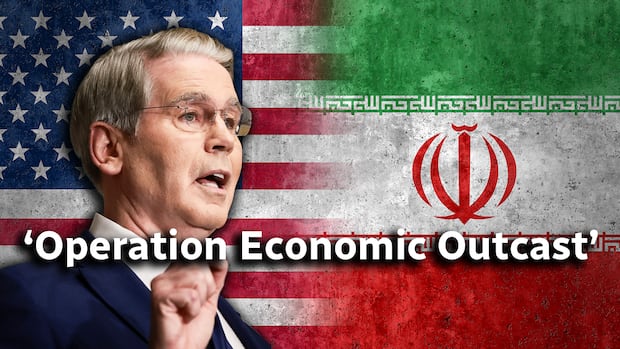
The Trump administration declared ‘economic D-Day’ against Iran and warned global trade partners to sever all financial connections with Tehran or face severe economic consequences. Avneet Dhillon breaks down this latest push to isolate Iran’s economy and why secondary sanctions threaten to put the U.S. on a collision course with China.
(Photo credits: The Canadian Press, Reuters, Adobe Stock and Getty Images)
Furthermore, Reuters reported this week that the Trump administration is preparing to send diplomatic personnel back to some missions in the Middle East that had been evacuated or reduced due to the conflict. Posts in Lebanon, Israel, Saudi Arabia, and Iraq are among those where staff will return, albeit at a reduced capacity, according to two individuals familiar with the matter who spoke to Reuters.
Bruen remarked to CBC News that the administration missed an opportunity to bring about change in Iran that could have been achieved at a lower cost, given the unprecedented level of domestic unrest and protests seen in January as demonstrators opposed the regime’s corruption and economic circumstances.
At that time, Trump assured Iranian protesters that “help is on the way,” but by the following month, the U.S. had commenced its military operation in collaboration with Israel.
Bruen, who served during Barack Obama’s presidency, expressed skepticism about what lies ahead after the six-month period.
“It will drag on indefinitely. I don’t foresee an easy resolution in the near future,” he stated. “I don’t believe the dynamics in the region will change significantly.”