
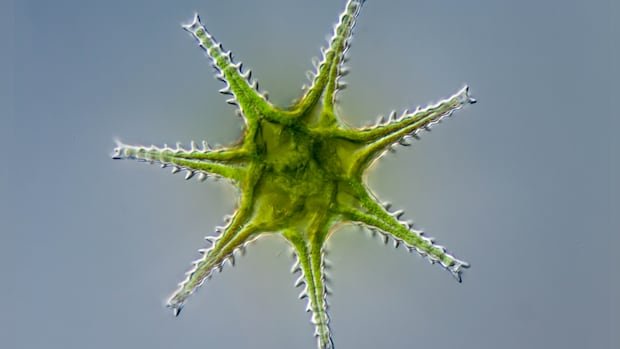

A rejuvenated forest may appear tall, vibrant, and verdant. Revitalized wetlands can teem with insects and flutter with birds. However, upon closer inspection, scientists are discovering that some of the tiniest residents, including specific mosses, lichens, algae, and fungi, are often still absent.
Revitalizing habitats such as forests and wetlands can aid in the conservation of dwindling species of animals and plants, facilitating their population recovery. Yet, recent studies reveal that not all species return at the same pace. Some of the smallest, least conspicuous inhabitants may remain scarce or missing for decades, potentially impacting other species.
Ellen Macdonald, a botanist from the University of Alberta, has dedicated her career to studying forests, focusing primarily on the minute flowers, mosses, liverworts, and lichens that thrive in their shadows, among their roots, or on the textured surfaces of their bark.
According to Macdonald, the number of species in these areas surpasses that of tree species by a significant margin. To the average observer, a regrown forest several decades post-logging may resemble an untouched one, brimming with tall trees, birds, and insects. However, Macdonald’s experiences in regrown coniferous boreal forests led her to sense that something was amiss, even if she couldn’t immediately pinpoint it.
Conducting comprehensive research, Macdonald synthesized her findings with global data to analyze the duration required for plants and animals to reestablish themselves as boreal forests regenerate post-clearcutting.
The study, recently featured in the journal Nature Sustainability, indicates that birch and aspen forests and their inhabitants tend to recover within 25 years, while conifer forests demand significantly more time. In conifer forests, understory plants, particularly lichens, mosses, and liverworts, require 85 years or more to reestablish, with some species failing to recover within the century of available data.
The observation of absent lesser-known species in restored habitats is not exclusive to boreal forests. Scientists researching wetlands and other rehabilitated environments have similarly noted the persistence of invisible species despite the seeming health of these areas.
Viktoria Wagner, an associate professor at the University of Alberta, characterizes this decline as a “silent form of loss,” where species may not go extinct but vanish from numerous previously inhabited locations, diminishing the species richness at individual sites.
Wagner’s concept of “dark diversity” exemplifies this phenomenon, supported by evidence of declining species in habitats worldwide. Although algae are not classified as plants, they are interconnected.
The loss of species can have hidden repercussions. Despite their size, algae play a pivotal role in global photosynthesis, impacting oxygen availability and food sources significantly.
The dwindling diversity can have cascading effects on ecosystems, negatively influencing other species. Understanding these patterns could guide landscape managers, such as foresters, in preserving more species. Macdonald suggests that selective or partial harvesting in conifer forests, instead of clearcutting, might be a more conducive approach based on the research findings.
The endangerment of algae habitats worldwide, along with their inhabitants, is a growing concern. Recognizing that many algae resemble mere smudges of color or slime to the untrained eye, Michael Melkonian diligently collects and preserves these species, amassing over 5,000 strains to create what he refers to as an “algal zoo.”
For Wagner, the pervasive loss of species underscores the need to safeguard biodiversity by maintaining and restoring sufficient habitat for species to thrive across landscapes. She emphasizes the necessity for active interventions to counteract the continuous loss of species and preserve biodiversity effectively.